Out of Egypt
Feast of the Holy Family. Fr Gregory Murphy preaches on society’s duty of care for families.
Most (sadly, not all) of us begin our existence in families. There, we learn love, sharing, co-responsibility: we grow and flourish. A functional family embodies the idea of the common good. That, perhaps, is why totalitarian societies were hostile to the idea of family loyalties – the loyalty of an individual was to be directed to the state or leader. Yet even under persecution families survived because this model of living seems innate to humans. Indeed, to those in the Judeo-Christian tradition it is God-given.
In the reading from Sirach we are given a precept of the mutual care of parents for offspring, and of offspring for parents. For myself, entering into the decrepitude of age, this advice is becoming increasingly poignant. If, though, we have learnt to love our parents then that love will perdure as the balance of caring changes from parents for children to children for parents, despite all the difficulties our present, selfish, society puts in the way. Implied in this is that children learn love through being loved by their parents, emphasised in the rather down to earth reading from Paul’s letter to the Colossians. Paul was of course writing from a patriarchal culture, wives being subservient to husbands, and yet subverts it: and that subversive agent is love. Earlier in the letter he has described the kinds of pagan behaviours Christians must put off, here he describes us as robing ourselves in the virtues becoming clothed with Christ’s love. He paraphrases the prayer Jesus gave us, the Our Father: ‘as the Lord has forgiven you, so you also must forgive’. Mutual forgiveness enables us to perfect mutual love. Recognising that we have been forgiven by the Lord, we are empowered to reach out in forgiveness to each other, overcoming our shame and fear of rebuff.
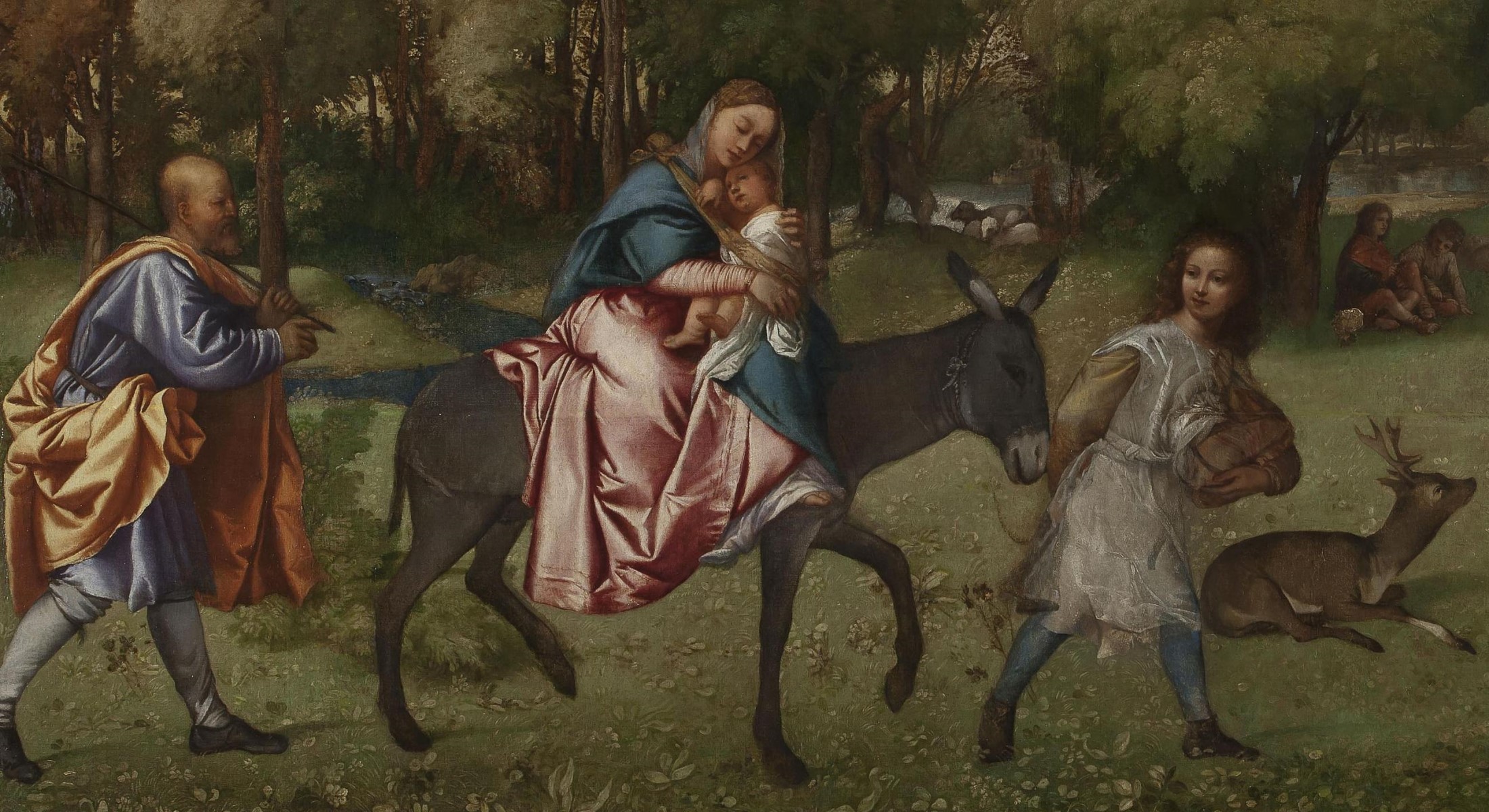
Matthew’s depiction of the Holy Family is of a family in crisis. Joseph, like his patriarchal namesake, dreams truly and believes the angel’s messages – first, in taking his already pregnant betrothed into his house; then in fleeing the paranoid persecution of Herod into Egypt, like Palestine ruled by Rome but outside Herod’s authority. In doing this, the family and the child Jesus are woven into the history of Israel, of God’s chosen people. Egypt was cited as a place of refuge for the Jews several times in the scriptures, and there was a large Jewish population there, especially in Alexandria. In this, Matthew recalls the story of Moses and the Exodus. Just as Moses was protected from Pharoah’s plot to kill the male children of the Hebrews, so Jesus was rescued from Herod’s massacre of the Holy Innocents by God’s act and Joseph’s belief in the message of the angel. Matthew’s modelling of Jesus’ childhood on Moses tells us something important about who this child Jesus is: he, like Moses, is destined to save the people of Israel. Matthew depicts Jesus as the new Moses, who will save us his people from their sins.
From the beginning then, Jesus’ life and that of his family was affected by the cruel decisions of those who were powerful and insecure. 2000-odd years later we find ourselves stuck in that same sinful model. The moral panic raging in our and other European societies against accepting refugees, many of them children, exemplifies this. It is worth recalling that all our recent popes, from Pius Xll through to Pope Leo XIV, have emphasised the right of humans to migrate in hope of building a better life for their families, whether from natural disasters, war, persecution, or poverty and lack of opportunities. We act selfishly when we ignore our governments’ collusion in spreading disaster in other areas of the world. We have proved effective at changing regimes but far less effective in rebuilding the societies we have helped tear down, so the present ‘refugee crisis’ is in part of our own making. Closer to home, our political choices have impoverished many, as seen in the various crises of housing, food price inflation, and unemployment. Individual families may embody the common good but that makes necessary a reciprocal commitment from the state to support it, despite the facile and false solutions offered by demagogues. What welcome now do we offer a child in need of a home?
Readings: Ecclesiasticus 3:2-6,12-14 | Colossians 3:12-21 | Matthew 2:13-15,19-23
Image: detail from Flight into Egypt by Titian via Wikimedia Commons (CC BY-SA 4.0)