

Galilee of the Gentiles
Third Sunday of the Year. Fr Benjamin Earl considers the significance of the place where Christ began his mission.
If you have been paying attention to the readings from St Matthew’s Gospel at Mass over the last few weeks of the Advent and Christmas seasons, it won’t have escaped your notice that the evangelist loves to make a link between prophetic texts from the Old Testament and the coming and action of Christ. Indeed, by the time we get to today’s Gospel reading, from the fourth chapter of his Gospel, St Matthew has already quoted or paraphrased passages especially from the prophet Isaiah, but also from Ruth, Chronicles, Kings, Micah, Hosea, Jeremiah, Deuteronomy, and the Book of Psalms, together with allusions to various other imagery from the Old Testament.
So it is important to understand that there is continuity between the old and the new covenants: Christ’s mission is one that continues God’s repeated calling of his chosen people. Christ completes and fulfils the story told in the Old Testament.
It follows that, in order to understand quite what Matthew is trying to say, and what Christ is doing in carrying out his preaching ministry, it’s necessary to have a certain awareness of that Old Testament story.
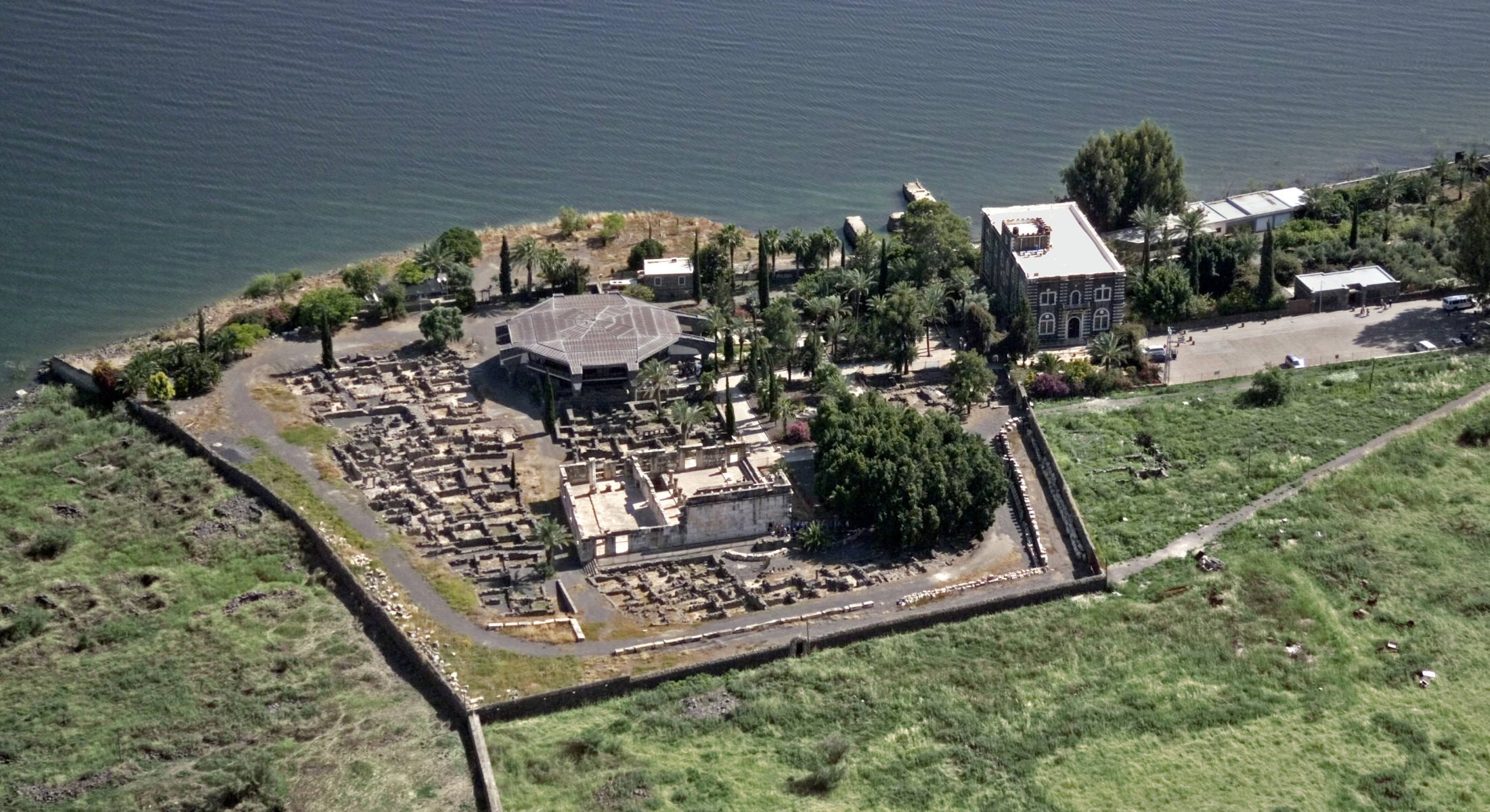
Today’s gospel episode, the calling of the first disciples, takes place in Galilee, albeit not in Jesus’ home town of Nazareth. Instead he moves to Capernaum, a town, we are told, on the borders of Zebulun and Naphtali, two of the twelve tribes of Israel.
The particular place chosen by Jesus is important; and to understand why, it’s necessary to talk a little bit about a man who rejoices in the name of Tiglath-Pileser III. Tiglath-Pileser was the king of Assyria, who in 733–732BC, when Pekah son of Remaliah was king of Israel, first invaded that kingdom, and the lands of Zebulun and Naphtali were the first to be ravaged. These were the first places to become ‘Galilee of the nations’, or ‘Galilee of the gentiles’, rather than Galilee of the Israelites: it is precisely here that the people lived in darkness and dwelt in the land and shadow of death.
So Jesus begins his mission of redemption in the very place where the fall of Israel began. Here in Capernaum, in Naphtali, in Zebulun: here are the ‘lost sheep of the house of Israel’ (Matthew 15:24). The cure begins right in the place where the symptoms of the disease began. Of course, ultimately the disease is sin, which goes back to Adam’s fall; but the fall of the Kingdom of Israel begins here, and so the preaching of the Kingdom of Heaven begins here: here in Capernaum.
And interestingly it is here in fallen Capernaum that Christ calls his disciples. The first co-workers in bringing the truth of the Gospel are called from among those who need to hear it first.
But that was indeed a long time ago in a land far, far away. Where is our Naphtali? Where is our Zebulun? Where in the modern world do we see the tyranny of error and injustice triumph over truth and right?
There are many answers to that question, but let me make a suggestion. A danger particularly afflicting our society today is that of relativism, which asserts that truth and morality differ according to perception: you call something an unprovoked invasion, I call it denazification; you call someone a victim of the state, I call him or her a domestic terrorist. What is true or moral for you might or might not be true or moral for me; and whatever doesn’t agree with what I would like is simply ‘fake news’. Unless we’re already in agreement, we can’t even have a rational conversation about what the purpose of our existence is, what is a right way of acting, and what we should make of what is going on in the world. We could go on for hours about the phenomenon, but implicit denial of the existence of truth and justice prevents human flourishing in friendship with God and each other as surely as did Tiglath-Pileser III.
The same light that shone in the land of Zebulun and Naphtali shines too in our land of Relativism. And here in the midst of the darkness, Christ continues to call disciples to preach the good news. We might call it a ‘new evangelisation’, as it is about preaching the truth of the Gospel to lands that had heard it before, but have since been ravaged by new enemies. New or old, it is evangelisation nonetheless. And Christ has called us to leave our nets, the things that tangle us and tie us down, and follow him. He is the way, the truth and the life. He is the great light which gives meaning to our existence.
It will be difficult, at times disheartening, perhaps even dangerous in challenging times. But professing and following Jesus Christ is without a doubt the most fulfilling thing you can do in your life. The light of truth has dawned – take it out there and let it shine.
Readings: Isaiah 8:23-9:3 | 1 Corinthians 1:10-13,17| Matthew 4:12-23
Image: aerial view of Capernaum via Wikimedia Commons


Anthony Phillips
An insightful and beautifully reflective homily, Ben, thank you.
Ian L Benjamin
A wonderful homily !
Dcn Leonard La’Rive
Thank you dear Rev. Fr Benjamin for a beautiful truthful reflection of the Gospel of St Mathew. God bless – Dcn Leonard La’Rive
Eileen Brydon
Thank you Rev. Fr Benjamin for a truly beautiful and insightful homily. It really taught me a lot about this scripture reading reflection in the Gospel of St. Matthew.
May Almighty God continue to bless you in this great Ministry🙏🏻