Touching Hope
Second Sunday of Christmas. Fr Thomas Mannion preaches on the authentic hope offered by the bodiliness of Christ.
Whether it be hope for a better economy, hope for an end to war, or the exhibition Injecting Hope: The Search for the COVID-19 vaccine, there has been much talk of hope in the past year.
In our own Dominican province we’ve had at least two conferences on hope: one in Edinburgh where we spoke about hope in the context of prison; hope in a system of physical incarceration and imposed imitations which impact the mental and spiritual development of persons. We also heard from a specialist about hope in the context of care for those with dementia, whose illness is bound up with the brain. The Dominican family seminar in Leeds looked at hope as lived in communities, and the theological virtue of hope.
Notice how the different hopes we speak of are bound up with the physical in some way. Hope for us, as bodily creatures, is connected to the physical because we are not only spiritual creatures but bodily too. We believe in the resurrection of the body and hope our physical bodies will share in glory.
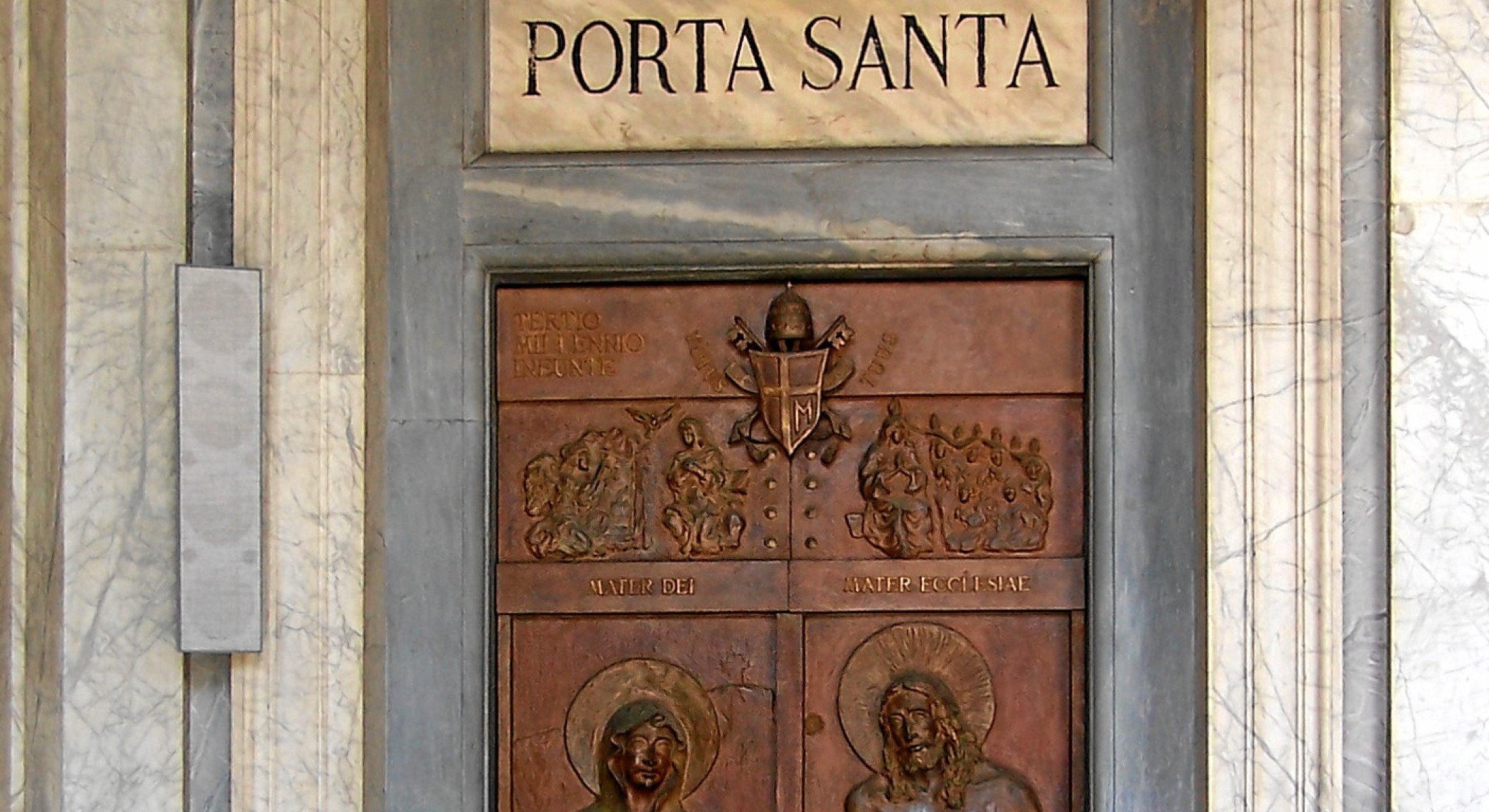
This past year has seen the Church universal celebrate the jubilee of Hope. In Rome, people would often touch the holy doors as they walked through seeking relief. Even this has a physical dimension.
We should remember this context of hope and its relationship to the physical world when thinking of today’s Gospel that speaks so much of the Word.
‘The Word’ can sound like an immaterial, esoteric concept to some but the Word of which we speak is a person, and this divine person took to himself a human nature. In Greek, ‘he became flesh’. This Word is seen, touched, and dependable. God is no mere concept much less a figment of our imagination.
In the first letter of John we read repeatedly in the space of the first five verses how we have seen, heard, and touched this word of life. Our hope is not a simple impression in the mind which can be confused with our imagination. Our hope is something seen, heard, and able to be embraced. This hope is communicated to us, in this season as much as at Easter, in the flesh. To speak of the flesh emphasises the one who we proclaim as Christians, the one who is our hope, is as real as you or I.
The Word who is our Hope has been made visible in our World. God is with us. That we have seen him tells us our hope is well founded. The Gospel is no allegory or myth.
It is because the Word has entered into our world and continually transforms us by grace that we too can be instruments and agents of hope. Our hope propels us through adversity.
What is the hope that Jesus brings? Is it economic prosperity in this life? Perhaps not: though friendship is good for economic prosperity, if we look at the lives of the saints and martyrs we can conclude that economic prosperity is not God’s primary concern. The hope we enjoy is friendship with God, a sharing of his own life and in the lives of the blessed. This friendship has the power to silence war and through it the prince of peace offers us a new life and new ways of living.
The first time we see our saviour ‘face to face’ in the flesh shows us his non-threatening nature. Again during his passion and death we see this non-violent, and yet warrior, God. This beholding of our God in the flesh is a foretaste of heaven when we shall see him as he is and we shall be like him forever.
While our hope is future-tensed we can experience this friendship now. It doesn’t promise us easy solutions or quick fixes but if we participate in the gift that God offers us, friendship – a generous sharing of our lives with God and each other, our hopes will be fulfilled in him.
Readings: Ecclesiasticus 24:1-2,8-12 | Ephesians 1:3-6,15-18 | John 1:1-18
Image: detail of the Holy Doors at the Basilica of Santa Maria Maggiore