


God is Better
Third Sunday of Lent. Fr Toby Lees finds inspiration for our Lenten fast in the story of the woman at the well.
How many times have you been to the pub for ‘just a swift one?’ And roughly what proportion of those times did ‘one’ actually end up being ‘just one?’ More often than not with me, one is likely to whet the appetite, not slake the thirst. As G.K. Chesterton quipped, a man whose physique suggested that he’d lost more ‘just ones’ than he’d won: ‘One pint is enough, two pints is one too many, three pints isn’t half enough.’
And it’s not just beer, perhaps the truest advertising slogan in history is ‘Pringles: once you pop, you just can’t stop.’ Crisps now come in larger size bags, with the advent of the ‘grab bag’ and the ‘sharing bag’ which is rarely shared. But how many times have I ever stopped eating Pringles because I’m full? Never! We’re not getting full even though we’re getting more.
Then there’s our phones. I’m nosy (or let’s call me a more polite term, I’m an anthropologist), I look over people’s shoulders on the bus and observe what they’re watching or reading. Regrettably, it’s never been Torch, but more likely an infinite scroll of TikTok clips, Instagram reels, and a fair bit of flitting between various apps. Pause for a second, laugh, then scroll on. Get bored, look at another thing, return to more of the same thing. What are they really searching for? What would cause them to rest and to be still? Rest? Do we even know ourselves?
Then there’s the binge-watching: box sets devoured in one weekend, episodes back-to-back. Why isn’t one enough? Even in light sitcoms with no gripping plot to keep us hooked, we keep hitting “next.” Are we not entertained?
Deep down, it’s the same restlessness everywhere—in our pubs, on our buses, in our living rooms. We see signs of a thirst that ordinary things can’t satisfy. If they could, why would we always need more?
Nothing we drink truly quenches; it’s never enough. We keep drawing from wells that either run dry too soon or whose contents leave us thirstier than before, but with less hope of ever being full. We make idols of good things—pints, likes, the latest phone, the best flat white—seeking ultimate satisfaction where it can’t be found.
Chesterton said we should thank God for beer and Burgundy by not drinking too much of them. The gifts are good, but when we love the gift more than the Giver, we grow restless and resentful. If we try to fill ourselves with creation rather than the Creator, we’ll go hungry. Finite things can’t satisfy infinite desire; they bloat rather than fulfil.
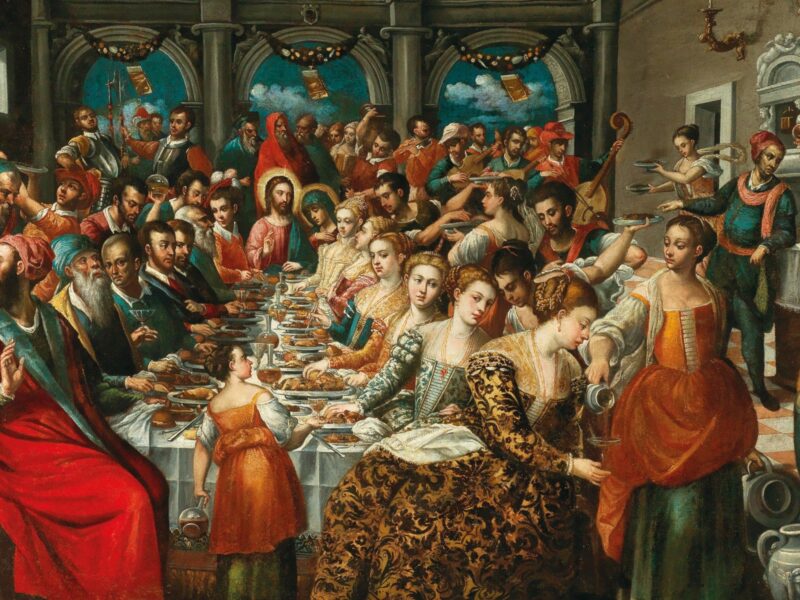
The gospel of the woman at the well is the great gospel story of thirst. Jesus meets a Samaritan woman at the well, a woman who knows our restless hearts all too well. Like St Augustine, who wrote, ‘Our hearts are restless until they rest in you,’ she carries a deep longing—one that five husbands and now a sixth partner haven’t filled.
Jesus tells her: ‘Everyone who drinks of this water will be thirsty again, but whoever drinks of the water that I will give him will never be thirsty again. The water that I will give him will become in him a spring of water welling up to eternal life.’
The woman said to him, ‘Sir, give me this water, so that I will not be thirsty or have to come here to draw water.’
I love her response—she believes in Jesus’ power, yet, in my opinion, she asks too little. She wants to avoid the daily chore of fetching ordinary water, but Jesus speaks of that deeper thirst: for love, for meaning, for fulfilment. Her string of relationships reveals an existential hunger no human companion or earthly supply can ever satisfy.
We often keep our deepest thirst buried. Bored? Scroll. Sad? Eat. Lonely? Another drink or episode or even now an AI friend. We fill a God-shaped hunger with other shapes that distort us and our desiring. Perhaps we’re scared what might happen if we let the deeper hunger and thirst really come to the surface?
That brings us to Lent and fasting. We don’t fast because good things are bad—we fast because God is better. We fast from what’s good to love the Giver more than the gift. A diet is for the body; fasting is for the soul. Fasting is ultimately so that our joy might be complete and that we might love more like Christ.
Ask yourself about your Lenten fast: does it help me love more? Does it set me free? Or for those currently finding themselves irritable in the absence of chocolate or beer, does it reveal quite how weak my capacity for love is?
Fasting over the period of Lent gradually loosens the grip of attachments so we can hold fast to God and neighbour. It frees us to uplift the downtrodden, forgive debts, share bread with the hungry, shelter the homeless.
Perhaps, also, we need to fast to truly feel hunger—not the trivial ‘this service is slow, I’m starving’ irritation, but a hunger for God’s things. Instead of numbing it with what never brings true joy, we pursue what does.
Fasting is brave. It might change your life—not just your waistline, but your heart too. Fasting is not the switch to diet Coke, but an opportunity to let Jesus offer you that living water, the spring welling up to eternal life. ‘Sir, give me some of that water.’ May we ask boldly, and receive fully.


Rudolf Carpanini
Such a good article/sermon. It resonates. It’s contemporary. And universal.
My own personal problem are the ninety years I carry on my shoulders, and fasting seem to have become much more difficult. I can’t resist the cup of coffee in the morning, nor the glass or two of wine with my meal. I justify my weakness by more alms-giving and prayer. But I don’t really convince myself.
Thank you for these thoughts. Excellent anthropology. The nosiness has been justified.
Charbel
❤️
Father, this comment is to let you know I’m reading Torch.
Charbel from Lebanon.
Neil
Thank you Fr. Toby. You provided water to slake that thirst.
Andrew Foster
Dear Toby,
Thank God that you have a lovely sense of humour. I know your captive audiences will be grateful. It has encouraged me in mine, although quite often there is not a smile to be seen and I wonder if anyone ‘got it’.
God bless you and don’t surrender your style. Our Lord definitely enjoyed a laugh despite Umberto Eco’s question in The Name of the Rose.