The Power and the Glory
Palm Sunday. Fr John Patrick Kenrick reminds us why we cannot overlook the reality of Christ’s suffering.
Mel Gibson’s film ‘The Passion of the Christ’ shocked people when it was first shown in 2004. Some people said it was an exaggerated depiction. Others complained that it was too violent and gory and not suitable for family viewing. In fact it was based on careful historical research and accurately depicted the inhumane torture and the barbaric method of execution employed by the Roman army. The account of the Passion we hear today from Matthew’s gospel is less detailed and therefore, in some respects, it is actually less shocking than that film. It is still a horrible tale but one that conveys a message much more profound than mere horror. For it is a story of love and of glory. Love – because Christ’s suffering and death is the clearest statement of the Father’s love for humanity. As Jesus hangs on the cross we can almost hear the echo of the story of how God tested Abraham in ch 22 of the book of Genesis.
God had asked Abraham to offer his only son (the only son of his wife Sarah) as a burnt offering. As Abraham sets out to do the Lord’s will Isaac innocently asks his father Abraham ‘My Father, behold the fire and the wood but where is the lamb for a burnt offering?’ To which Abraham gave the reply ‘My Son, God himself will provide the victim’. As Abraham is about to sacrifice his son God stops him saying ‘Now I know that you fear God, seeing you have not withheld your son, your only son. from me’. On that occasion Abraham offered a ram in place of his son Isaac and the book of Genesis goes on to say ‘Abraham called the place ‘The Lord will provide’; as it is said to this day, ‘On the mount of the Lord it shall be provided’. Today we are reminded that on the mount of Golgotha the Lord did indeed provide a victim, His only Son Jesus Christ, who died in obedience to His Father’s will to save all his children from their sins.
So this is a story of divine love. Everything that the Son said or did during his life on earth conveyed the care and compassion of the Father. But only this voluntary surrender, only this depth of obedience could adequately express the Father’s love for us. Jesus submitted to this for you and me. The passion and death of Christ are the most eloquent statement of that divine love which embraces the whole of humanity from the most noble saint to the most appalling sinner. Jesus sheds his blood in equal measure for the bad and the good because that is the nature of divine love.
If the passion is a statement of divine love it is also the moment of triumph – a statement then, of Christ’s glory. Christ’s human nature participates in the very redemption of humanity. There is no more convincing response to the tempter than this death. This is not God delivering his people from Pharaoh with a mighty arm and dramatic displays of divine power. The real power of God is seen in this culmination of self-emptying, in a humility too great for us to comprehend.
This story is familiar to all Christians, not only because we have heard the passion being read so many times but also because it is a familiar story of how the innocent have suffered throughout human history. If God’s love for us is a mystery, no less a mystery is the history of human cruelty and acts of hatred perpetrated even by those who claim to be followers of Christ. That is why we have to resist any urge to play down the full horror of crucifixion and also the temptation to dwell on just the pleasanter moments in Christ’s life.
By contemplating this terrible drama we begin to grasp something of the ugly reality of sin but also, more importantly, the infinite nature of divine mercy and then we can finally begin to move beyond our own pain and our own sins to focus on the all important matter of divine love and of that never ending friendship with the Father that Christ promised to his disciples in the kingdom of the blessed.
Readings: Matthew 21:1-11 | Isaiah 50:4-7 | Philippians 2:6-11 | Matthew 26:14-27:66
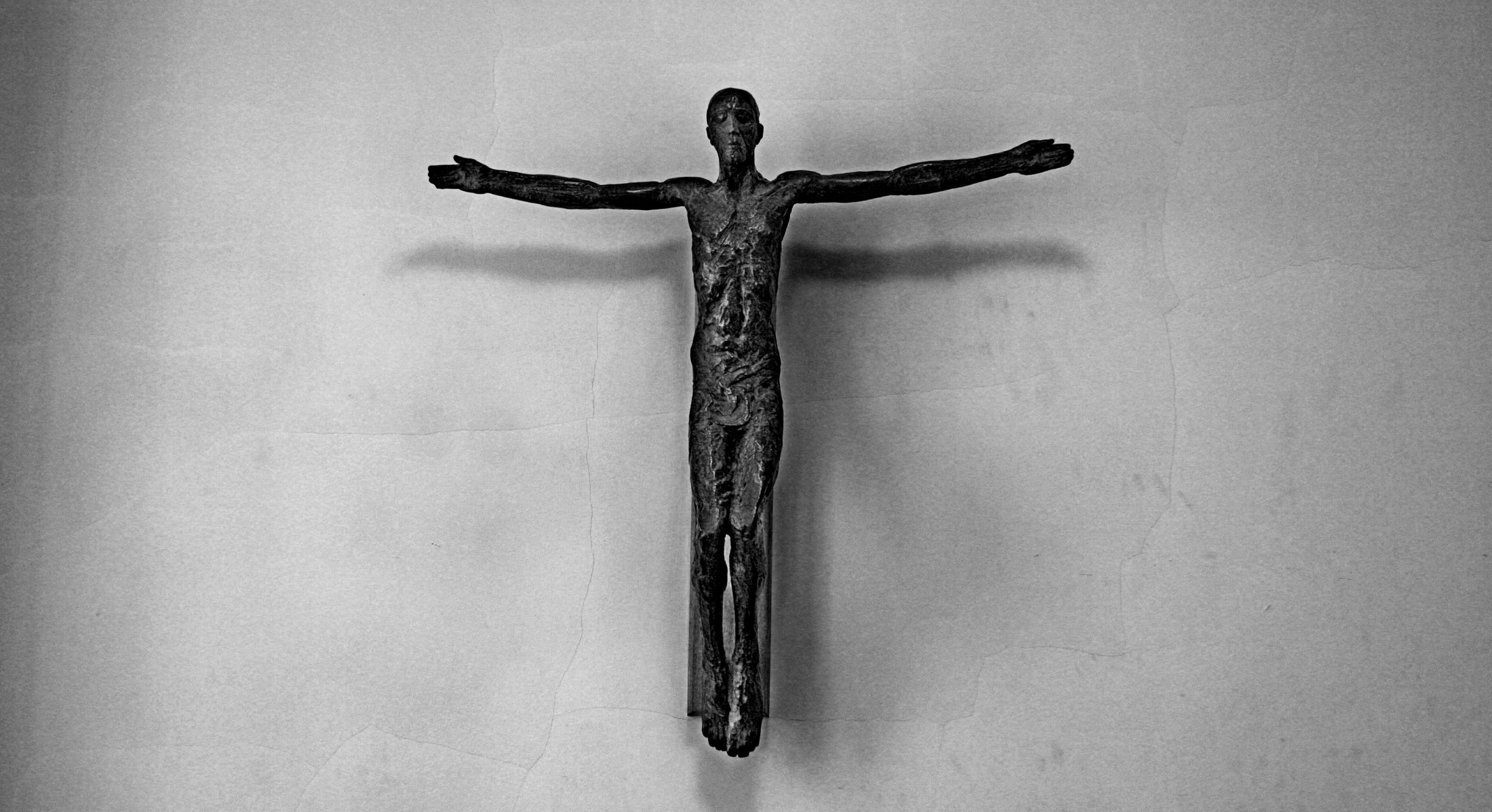
Image: detail from Crucifixion by Elisabeth Frink (CC BY-NC-SA 2.0)