Do I Wake or Sleep?
First Sunday of Advent. Fr Euan Marley ponders why we are ever awake.
In the Gospel for this first Sunday of Advent, we are told to watch and stay awake. This is in the Gospel of St Mark, but earlier on in that Gospel we have this parable. ‘He also said, “The kingdom of God is as if someone would scatter seed on the ground, and would sleep and rise night and day, and the seed would sprout and grow, he does not know how’ (Mark 4:26-27). So, which is it, stay awake or sleep? I would start by a claim about animals. Scientists often ask why animals sleep. I think it would be easier to answer the question of why they are ever awake. They wake up to eat, exercise their bodies, avoid danger and to procreate. Yet there is nothing unnatural about animals sleeping. Most of the biosphere is asleep as it were. Human beings are the only animal where being awake is necessary for them to be who and what they are. We have minds reaching out to the truth, and that means we need to be awake. Sleep is a nuisance for us, but we need to sleep and our ability to sleep is a blessing, but also a way of showing our trust in God. ‘I lie down in peace and sleep in peace, for you alone make me rest secure’ (Psalm 4). Sleep too makes us build houses and so learn to belong to one another. Without sleep there might be no human community at all.
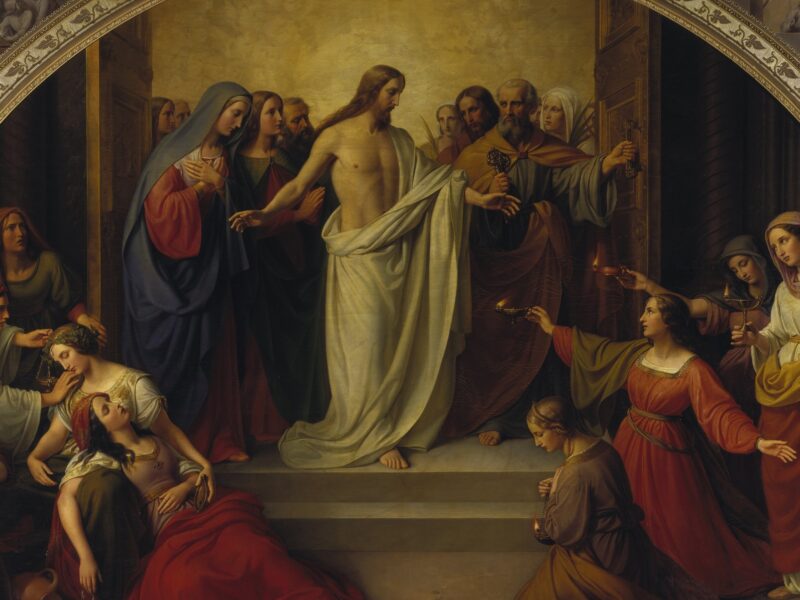
Nonetheless, we are to be awake, and God does not sleep. ‘He who keeps Israel does not sleep or slumber (Psalm 121:4). We wake to face the fears of our lives, to meet the challenges, but also to enjoy the beauties of our lives, and to be for each other in friendship and joy. More than that, we are to be awake when the Lord comes, and this is why there are so many images in parables of that long vigil that we should make of our lives in the Gospels. God will come like a bridegroom (Matthew 25:10), an owner demanding his rights (Matthew 21:40), one who in our mind expects to be served (Luke 17:8), yet who will make us sit down and he will serve us (Luke 12:37). We are even told that God comes like a thief in the night (Matthew 24:43). This is why Advent is the season of the Church’s life which is for all the year round. In ordinary time, Lent or Easter, still we are in Advent, because all our life is an expectation of the coming of God. He comes in the moments when we must make the choices that will decide who we truly are, the moments of changes beyond our control, the moment of death, and the time of the death of the human race. Human history will come to an end, maybe in our lives or not, but come it will. Meanwhile we must live in watchfulness.
In our prayer, in the expectant life we should live, sleep and wakefulness are not always exclusive. Think of the verse of the Song of Songs, so beloved of St John of the Cross: ‘I sleep but my heart is awake’ (5:2). To stay awake doesn’t always mean to be doing things, but it does mean to have a quiet certainty that the kingdom is coming. The title of this homily comes from the last line of John Keat’s ‘Ode to a nightingale’. In the poem, Keats hears the nightingale singing in the dark and, in an almost trancelike state, imagines it singing of the past, of summers long ago, of figures from the past, emperors and clowns, and ‘the sad heart of Ruth’. Keats longs to be taken away from the world he lives in, but that is not our expectation. We wait for the redemption of the whole world, a final triumph of Our Lord when he comes, and we help the coming of that moment if we are patient in the life we live, believing always in his presence now, as well as his coming in Advent. Ruth was sad because she lived in exile, but she lived in Bethlehem out of choice, for the sake of her mother-in-law, Naomi of Judah. She would become the great grandmother of King David, and in the little town of Bethlehem would come a greater king. In our lives, we too wait for the return of that greater king, but in prayer he is always near, and all our life is an Advent.
Readings: Isaiah 63:16b-17; 64:1, 3b-8 | 1 Corinthians 1:3-9 | Mark 13:33-37
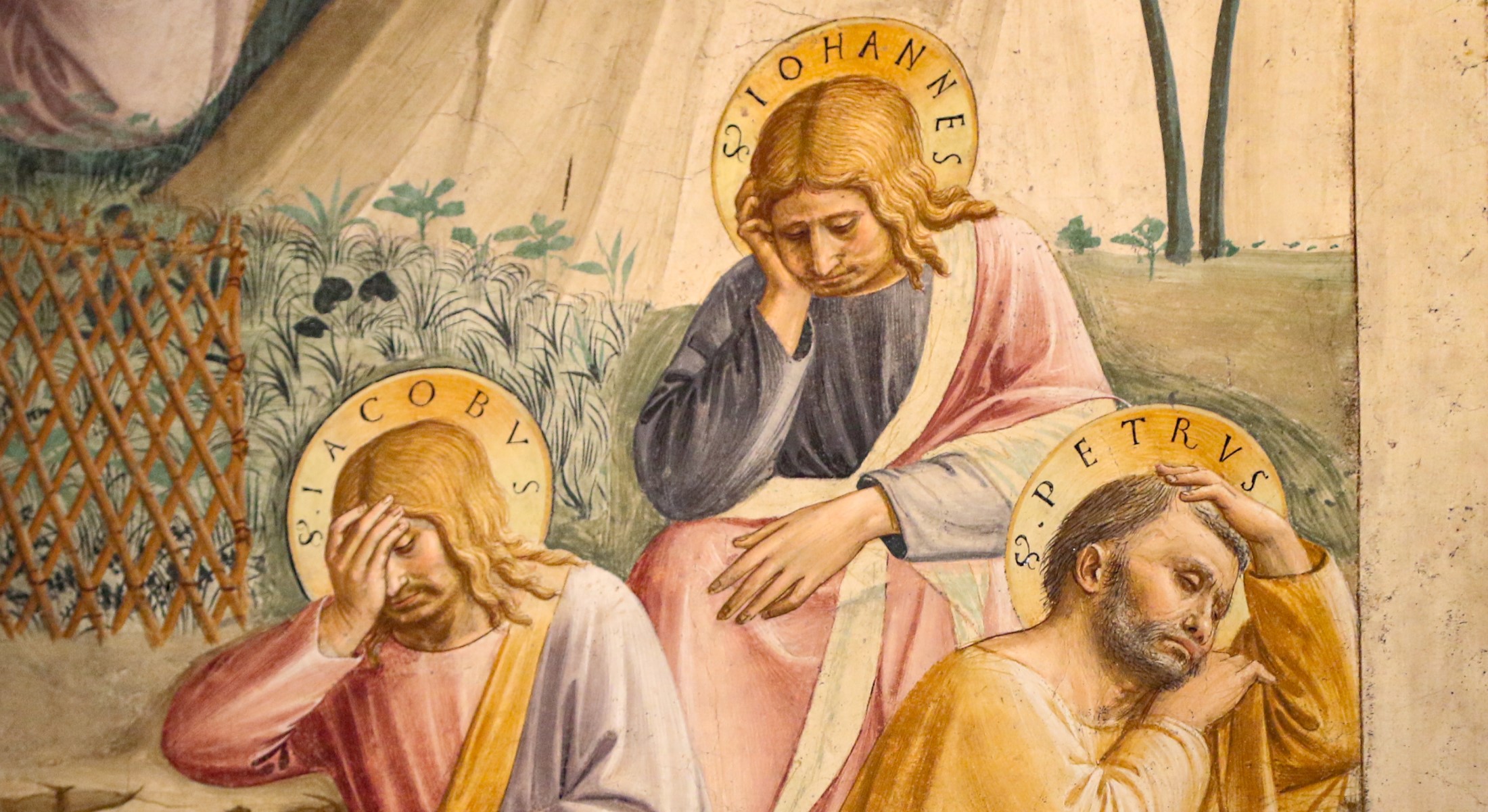
Image: detail from a fresco by Fra Angelico in one of the cells in the Dominican convent of San Marco, Florence, photographed by Fr Lawrence Lew OP