Catholic Social Teaching: Health
2.79k
“Sharing in the joys and hopes, sorrows and anxieties of the people of every age, the Church has constantly accompanied and sustained humanity in its struggle against pain and its commitment to improve health. At the same time, she has striven to reveal to mankind the meaning of suffering and the riches of the Redemption brought by Christ the Saviour.” (WDS 2000). Whilst in many countries the vast majority of healthcare is now provided by ‘secular’ institutions, the structures and pattern of Western medical and nursing care nonetheless remain imprinted by this legacy of centuries of Christian healthcare ministry.
A sustained theological treatment of health, suffering, and forms of healthcare composed a central feature of St. John Paul II’s Papal Magisterium. This was reflected particularly in his apostolic letter Salvifici Doloris (on the Christian Meaning of Suffering) and the establishment of the Pontifical Council for Pastoral Assistance to Health Care Workers (by the letter Dolentium Hominum), not to mention the Pope’s personal witness to the dignity of life and suffering reflected in his own personal illness and exemplary Christian death. From John Paul II’s reflections on the Catholic healthcare tradition, three clear and related themes can be discerned:
- the duty of care for the sick is a matter of natural justice;
- that healthcare must take account of the transcendental meaning of suffering; and
- that Christian theology implies a particular ‘theology of health’ that is not always compatible with secular approaches to treatment and care.
As well as flowing from imitation of Our Lord Jesus Christ’s concern for the sick and suffering, the Christian healthcare ministry reflects natural human solidarity. Importantly, the adequate provision of properly dignified healthcare to all is a matter of natural justice: each person receives life as a precious gift from God; all human beings are created in the Image of God and possess an inalienable dignity, which is properly respected by the promotion and nurturing of health and by the alleviation of suffering. It is a solemn obligation placed on us by our natural constitution as social creatures—as well as by God’s positive law as revealed in the Holy Scriptures—to steward our resources so as to ensure proper care is available for all. This stewardship extends to include our intellectual resources, demanding that scientific endeavour be ordered toward the promotion of global human well-being, placing the cultural capital of the intellectual elite at the service of the poorest and most needy of our brothers and sisters.

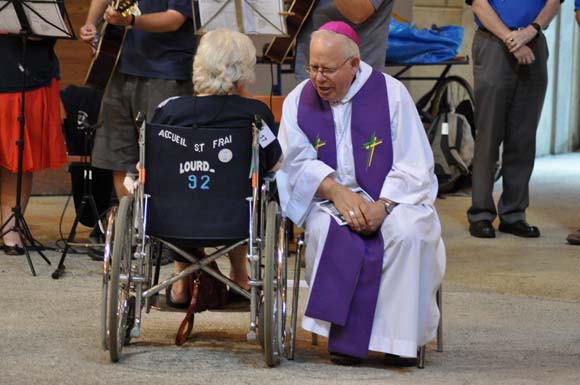
Although the importance of the macroscopic policy-level cannot be overestimated, the heart of the Catholic tradition of healthcare is the uniquely blessed personal relationship between the sick person and their individual carers. This relationship between the sick and their carers, whether professional or non-professional, is a communion of persons coequal in dignity, and as such constitutes a shrine to the dignity of the human person: those who have care of the sick stand on God’s holy ground, invited to see the presence of God in the sick person and to reflect the love of God and the goodness of creation to the vulnerable. It is not that carers might be ‘ministering to angels unawares’, but that they are definitely ministering to particular human persons, irreducible in their uniqueness as a child of God. “Each of us is the result of a thought of God. Each of us is willed. Each of us is loved. Each of us is necessary.” (Benedict XVI).
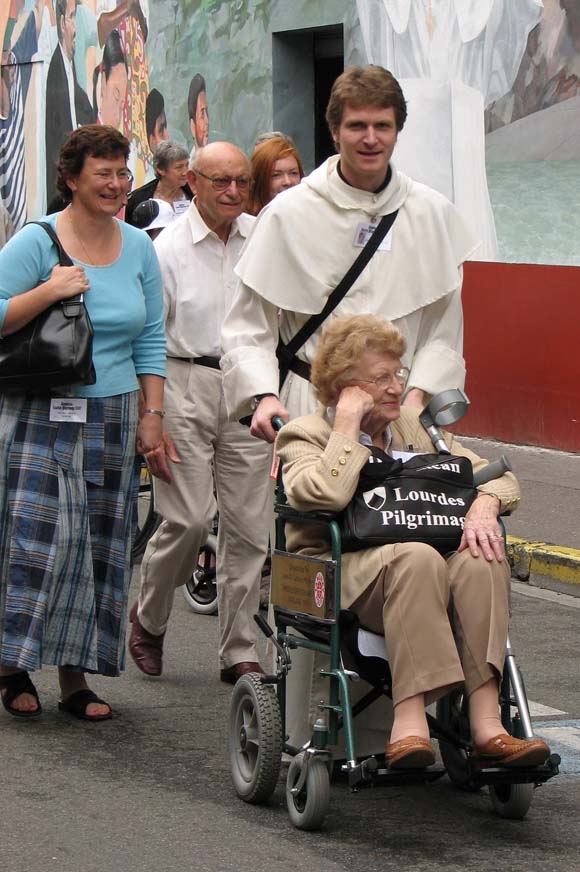
The essentially personal nature of care gives it its definitive character. Despite the emphasis placed on ‘choice’ as a central principle of modern care, healthcare workers are not merchants of an arbitrary product, but find their ministry patterned by the object of their care (the holistic reality of the human person as divinely willed and cherished). Whilst all those involved in healthcare are entitled to just remuneration and proper legal protections, their role is not merely a job. Healthcare workers must remain ever mindful of the dignity of the gift and obligation of their vocation to be “guardians and servants of human life” (WDS, 1999). Christian approaches to healthcare resist the fragmentation of the human person that divides the ‘biological’ from the ‘emotional’ and ‘spiritual’: we care not for the ‘liver disease in bed three’, but for a person with a name. No person is reducible to a pathology.
“It is only in the mystery of the incarnate Word that the mystery of man takes on light” (GS §22): notwithstanding the natural obligation to care for the sick, the full meaning of sickness is comprehensible only in the Easter light shed by the resurrection; the incarnation and Paschal mystery is the “supreme and surest point of reference” that enables us to make sense of human sufferings (SD §31). Although suffering is never to be desired per se, and always to be alleviated when possible, Christ’s suffering bestows a certain relative dignity on human sufferings: by uniting their sufferings to Christ, the Christian’s suffering takes on a salvific value, the sickbed “becoming like a shrine where people participate in Christ’s paschal mystery” (WDS §9). This does not mean that the Church is glad that people suffer, nor that that those wracked with the sorrows of suffering should simply put up with them:t he Church continues to look forward in certain hope to the new creation, in which suffering and pain will have no place. Suffering and pain remain a scandal, but cannot obliterate human dignity.
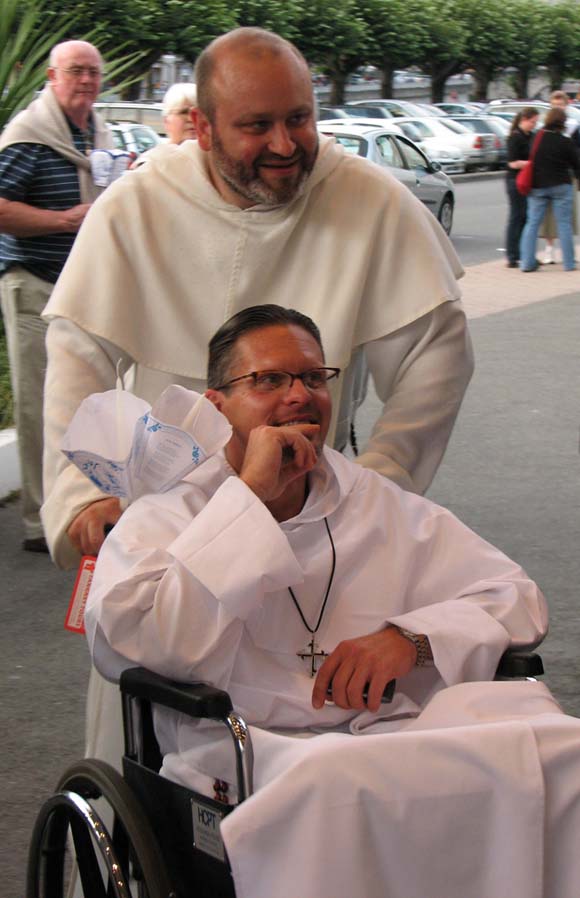
An authentically Christian approach to healthcare, however, must take account of this transcendental meaning of suffering. The Christian presence in healthcare is an essential witness to the dignity of Christ and a component of the New Evangelisation: confronted with suffering, illness and the possibility of death the human person is stripped of all false attachments, and forced to confront the reality of their situation. “Even the most heedless person is prompted [at the bed of a dying person] to wonder about his own life and its meaning, about the reason for evil, suffering and death.” For this reason, Christians must always be present to witness—occasionally by words—to the true value and meaning of human life.
As a result of this transcendental dimension, health per se does not become an ultimate end and absolute obligation. In a society in which there is a risk of making health an idol to which every other value is forced to be subservient, Christians are involved in the “promotion of a health worthy of the human being” (WDS 1999). A Christian understanding of health does not equate well-being with self-satisfaction or the exuberant vitality of youth, nor does it seek to preserve bodily life at all costs. Our duty to preserve bodily health is, therefore, not strictly absolute: the art of living well is also the art of dying well, and—when all reasonable life-preserving treatments are exhausted—each of us must (God-willing at length) make our final journey into the next life. Palliative care, ordered towards the alleviation of suffering, should bestow upon these hallowed final moments of life a quiet and peaceful dignity, in which the individual is cherished as a member of the Christian community.
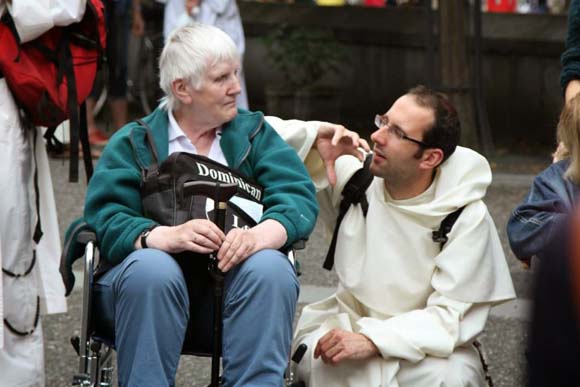
Much Catholic Social Teaching related to healthcare stresses our relationship to others, but an essential feature of the Catholic tradition is its emphasis on self-care, including not only physical health (avoiding intemperate relationships with food, confronting addictions, taking regular exercises) but also emotional and psychological well-being (taking rest, observing the third commandment consolidating friendships, finding creative opportunities for recreation). Whilst Christ sought out the leper—the icon of exclusion and fear in his own day—we too must seek out the modern equivalent, those who hide themselves away, ashamed of their affliction. We must greet them with the Good New of Christ: in their weakness, they will strengthen the Church, that they are for us a blessing, for whom we thank God.