

Solomon and the grace to begin again
Solomon’s collapse warns that even great gifts can be squandered when the heart drifts, and that a leader’s unfaithfulness becomes a wound for many. Two spiritual safeguards, memoria Dei and St Benedict’s conversatio morum, can help us in our journey and fight the subtle surrender that stops expecting grace to change us
The following homily was preached to the student brothers during Compline. You can listen here or read below:
Reading: 1 Kings 11:4-13
How did things go so terribly wrong with Solomon? At the beginning of his reign, he had shown himself the wisest of kings: he asked the Lord for wisdom and prudence rather than wealth and honour, and the Lord granted it, together with great glory. How could someone blessed with such graces turn away so radically from the One he had loved and served for so many years?
When people, especially those with a public role like Solomon, fall away from the faith, it cannot but become a wound and a stumbling block for many. The consequences often reach far beyond the individual. Solomon’s betrayal, as we read, will affect the whole of Israel.
We should not speculate too much about the hidden twists of a conscience that lead to such radical unfaithfulness. Scripture itself gives little detail about Solomon’s interior struggle. Instead, it is more useful to keep in mind at least two attitudes that can help prevent such a ruinous fall from the height of grace, which we have received as sheer gift.
First, we should cultivate what the tradition calls the memoria Dei, the remembrance of God: a grateful memory of the ways the Lord has shown himself faithful and powerful in our lives. This memory binds our days to him when temptation arises, when circumstances get tough and when the season of spiritual “prosperity” feels long gone. If only Solomon had kept before his eyes the many graces he had received—even the two times the Lord had appeared to him—would he have turned away from the God of his father David?
Second, we all need what St Benedict places at the heart of monastic life: conversatio morum, the ongoing conversion of life, living in a continual readiness to begin again. However much we have received from the Lord, and however much we may have grown, we must never imagine we have “finished” our race. That illusion can come from pride which persuades us that we are already complete, but it can also come from a subtler and more dangerous temptation: a kind of false realism that makes us say: “This is just how I am; I wont’t really change”.
This can become an excuse not to open ourselves more deeply to conversion by God’s grace. It sounds humble, but it is actually a quiet surrender that lowers our expectations of grace and treats holiness as unrealistic.
In the end, what should animate us is the certainty that God wants to give us even more than He already has. That is why vigilance and conversion matter. And perhaps we can even finally grow into the spiritual maturity of St Thérèse of Lisieux, who wrote: “The farther one travels along that road, the farther away the goal seems to get. Nowadays I’m resigned to seeing myself in a permanent state of imperfection and I even delight in it.”
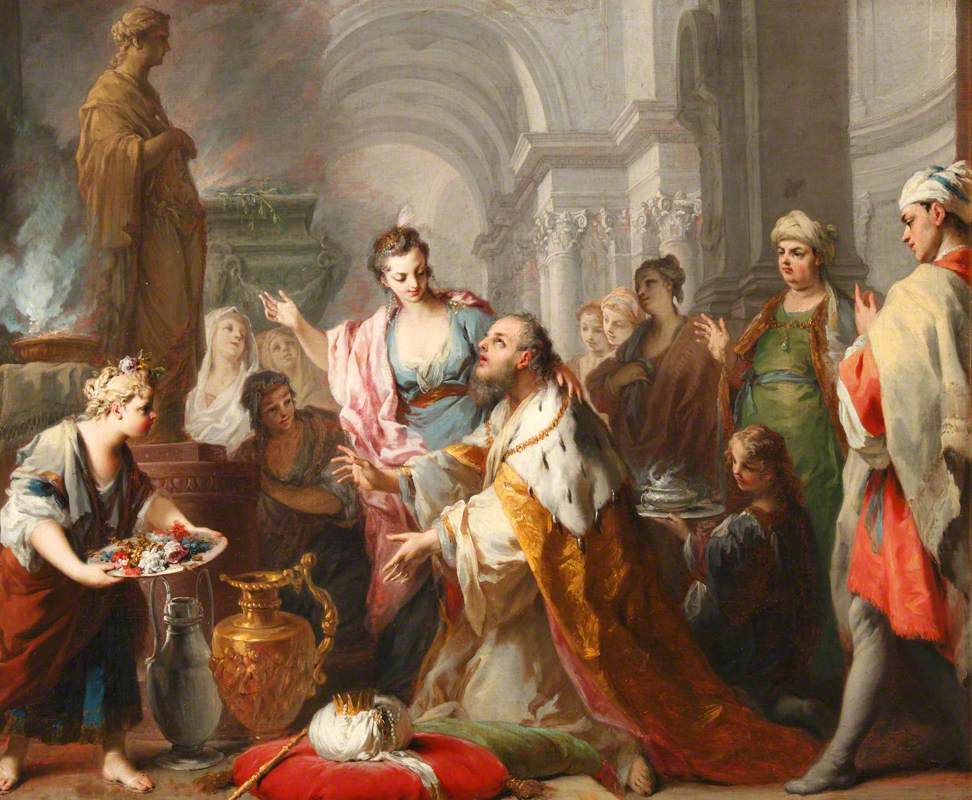
Image: Amigoni, Jacopo; Solomon Sacrificing to His Wives’ Idols; National Trust, Osterley Park.

Michael O Driscoll
A thought provoking homily for which I am grateful. Go raibh míle maith agat. A thousand thanks , in Gaelic )
Micheál
Óscar Bagán Catalán
Dear Brother,
I hope you are well. I am writing as a long-time reader of the forum, which I have followed regularly for many years. I have always appreciated the seriousness, depth, and practical spirit of the discussions shared here.
Some time ago, the forum used to publish lists of useful books that could help readers live Lent more fruitfully. I remember those recommendations as being especially valuable, both for personal reflection and for maintaining a proper spiritual focus during this important season. I must admit that I miss that initiative, as I found it very helpful.
Would it be possible to recommend some books again that could guide and accompany us during Lent? I am sure many readers, myself included, would greatly appreciate such suggestions.
Thank you very much for your time and for the continued work you do through the forum.
Kind regards,
Oscar
SGeorge
Thank you for sharing this beautiful reflection with spiritual depth & practical application. It’s a clear spiritual guide for many of those who have forgotten the good Lord’s love for them & have turned away from him & gone astray . Praying for all those souls who are in this situation, especially among our friends & family .
SGeorge
Thank you for sharing this beautiful reflection with spiritual depth & practical application. The article is a clear spiritual guide for many of those who have forgotten the good Lord’s love for them & have turned away from him & gone astray . May God’s mercy help us care in prayer for all those souls who are in this situation similar to Solomon, especially among our friends & family .