

On Our Side
The Baptism of the Lord. Fr Joseph Bailham preaches on the solidarity Christ shows in his Baptism – and on the Cross.
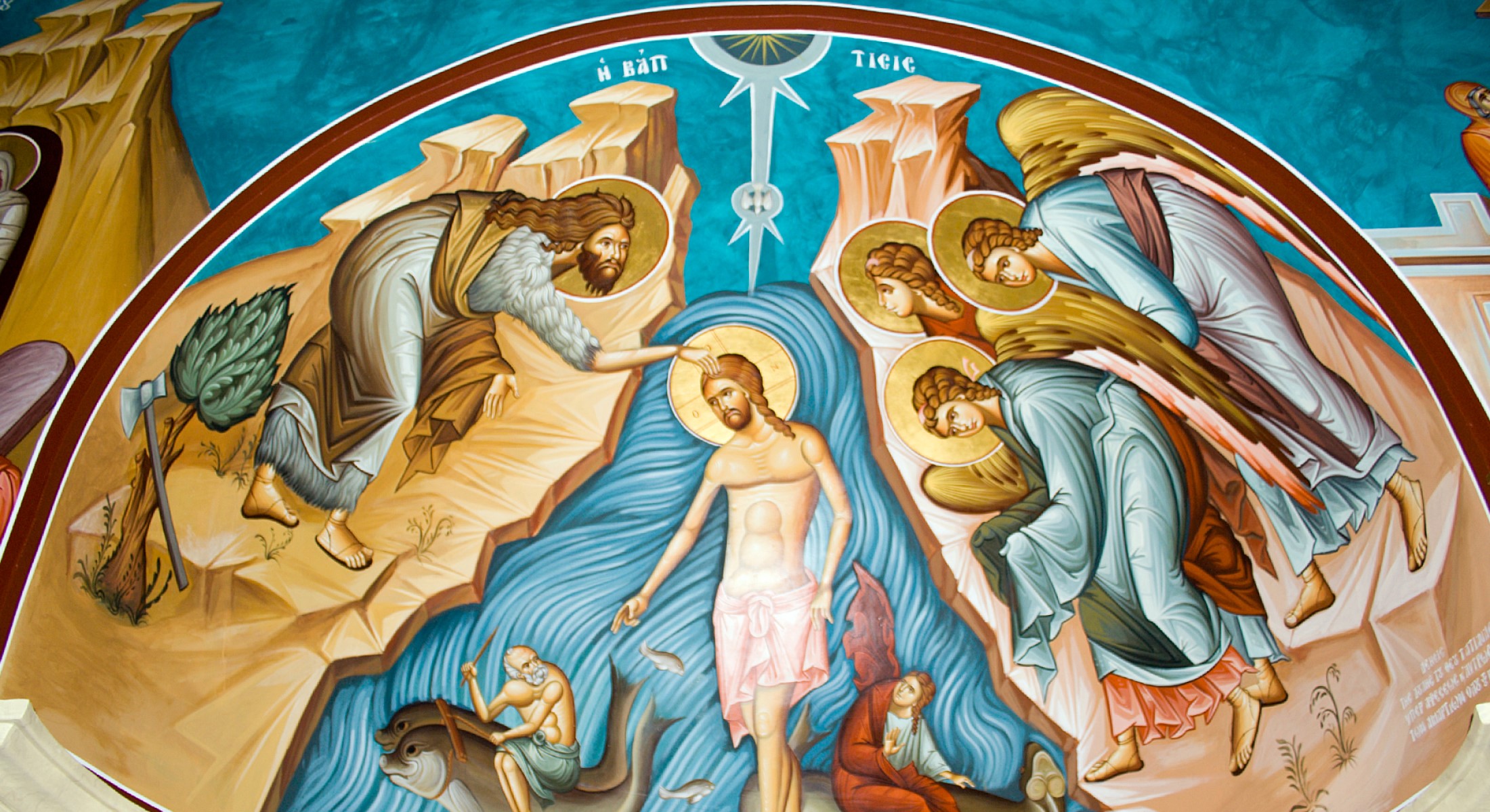
Today’s feast is a peculiar one: the Baptism of the Lord. From the outset we know that this is not the same baptism we receive when we enter the Church, even though it is closely related. John’s baptism was a penitential act, undertaken by those who acknowledged their sins and wished to turn their lives back to God. For this reason, Jesus’ request to be baptised appears strange—even to John the Baptist himself.
John, the last of the Old Testament prophets, was preparing the way for the Lord. We can imagine the scene: crowds lining up for a baptism of repentance, and among them stands the one who is sinless, the one whom John had foretold. Understandably, John tries to prevent Jesus, saying, ‘It is I who need baptism from you… and yet you come to me!’ In this moment, John recognises that Jesus has no need to be reoriented toward God, because he is God himself.
So why does Jesus undergo a baptism he does not need? From a theological perspective, this should not surprise us. As St Thomas Aquinas explains, God did not need to become incarnate to redeem humanity; he could have done so in another way. Yet God chose to dwell among us in the person of Jesus. This choice was not necessary, but it was fitting. Jesus himself uses this language when he tells John, ‘It is fitting that we should do all that righteousness demands.’
Throughout Christ’s life, we see God’s desire to be in complete solidarity with humanity. By assuming a human nature, Christ takes on everything essential to being human to redeem and sanctify it. We are so accustomed to sin that we often think it is part of what it means to be human. When someone fails, we say, ‘He’s only human.’ But theologically, sin is not natural to humanity; it is a distortion of it. Sin is like a hole in a sock—something that does not belong there.
Christ’s baptism is therefore an act of profound solidarity. By submitting to a baptism of repentance, Jesus visibly associates himself with all who need to turn back to God. He does not do this to repent—he has nothing to repent of—but to show that he stands with us, as our advocate, sharing fully in our condition. He shows us that he is on our side.
This act of solidarity also points forward to the ultimate act of solidarity and love: his suffering and death on the cross. Faced with human sin and destruction, Jesus does not turn away or abandon us. He does not decide that humanity is not worth saving. Truly God and truly human, he experiences pain and suffering as we do. Moreover, with the mind of God, he bears the weight of every sinner’s isolation from God, from the first human being to the last. This helps us understand why, in Gethsemane, his anguish was so intense that he sweated blood.
The feast of the Baptism of the Lord celebrates Christ publicly and deliberately identifying himself not only with humanity in general, but with sinners in particular—which includes all of us. Though he himself was without sin, he freely chose to be counted among us. This feast is inseparable from the mystery of Easter, which reveals that Christ’s actions were not empty gestures, but signs of the immeasurable depth of God’s love.
All of us know what it is like to feel isolated because of our sins or ashamed of our thoughts and actions. Such experiences can distance us from others and lead us to believe that God would want nothing to do with us. Today’s feast reminds us that God knows us as we are and still chooses to associate himself with us. He is among us to guide, heal, and redeem.
Christ’s baptism also reminds us that, although we are sinners and deeply loved by God, we are called to repentance. Repentance is the gateway through which God’s divine life bears fruit in us. Jesus himself had no need to repent, yet by receiving a baptism of repentance—and by giving the Church the sacrament of Reconciliation as a fruit of his sacrifice on Calvary—he shows us the Christian way: it is a way of continual repentance.
Readings: Isaiah 42:1-4,6-7 | Acts 10:34-38 | Matthew 3:13-17


Vincent Harvey
Thank you Joseph. Given me a few insights to enable me to unpack this Gospel passage and make the most of this Feast! Also it’s relevance to me and to ‘reconciliation’.
John P Rosson
Good thoughts Solidarity with humanity
Viswanathan R
Greetings dear Father,