Cut to the Quick
Third Sunday of Easter. Fr Bede Mullens reminds us that repentance brings a change of mind and of life.
‘Remember, the ransom that was paid to free you from the useless way of life your ancestors handed down was not paid in anything corruptible, neither in silver or in gold, but in the precious blood of a lamb without spot or stain, namely Christ.’ St Peter is exhorting the newly-baptized not to let Christ’s blood be shed in vain. We all know that we have been redeemed by the precious Blood of the Lamb, and only His blood could pay the price of our salvation. But even His blood cannot help us if we do not truly repent and turn aside from the long-trod path of sin.
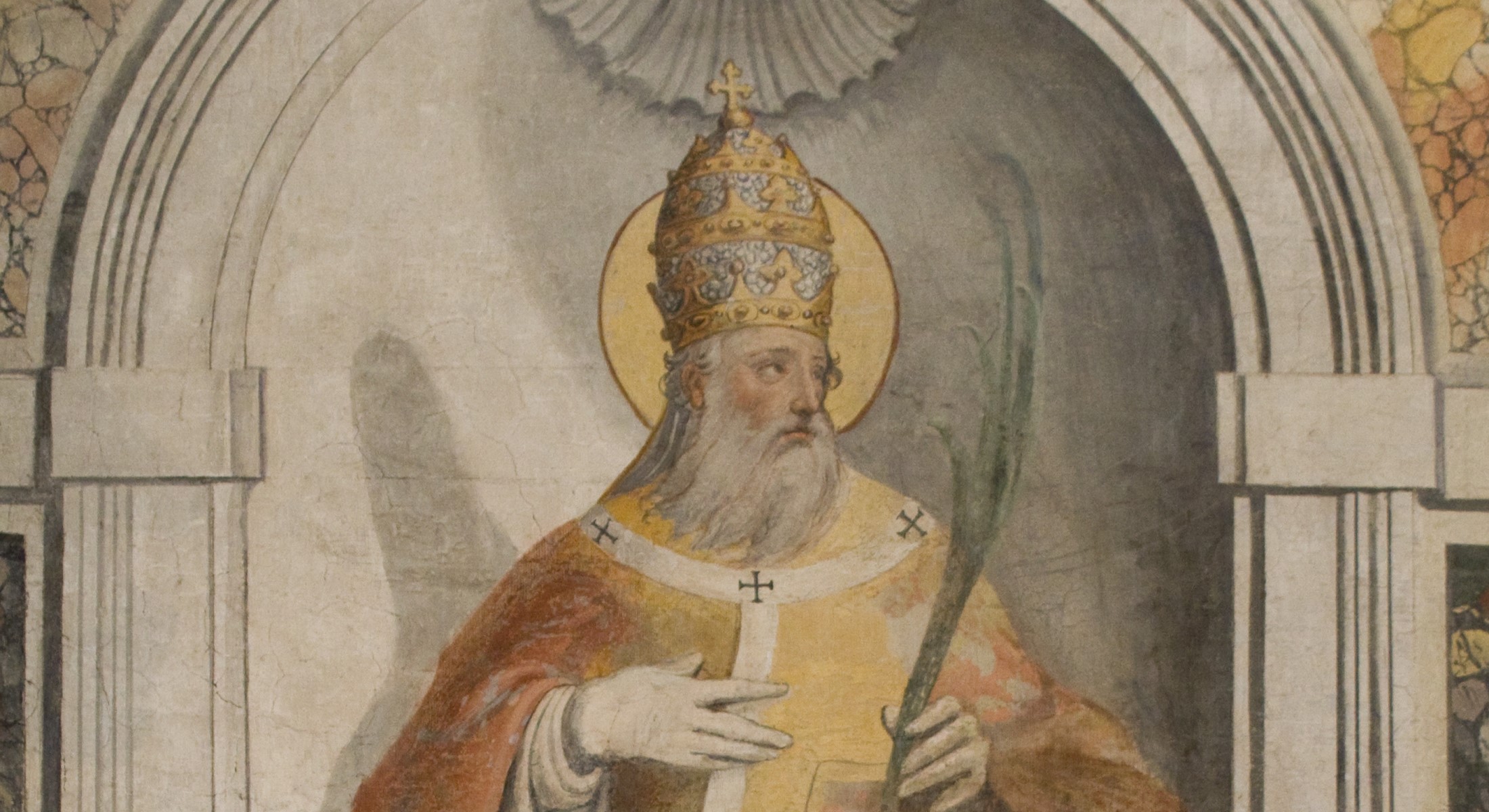
There is an ancient letter written from the Roman church, by the hand of Pope Clement, to the Corinthians (who were still misbehaving like they did in Paul’s day). It points out that in different ages, God has provided different means of repentance. In Noah’s day, people had the opportunity to follow Noah into the ark. When Jonah preached to the Ninevites, they put on sackcloth and fasted. The Israelites had the system of sacrifices provided for by the Old Law. In our days, it exhorts, ‘Let us fix our gaze on the blood of Christ and let us realise how precious it is to his Father, since it has been poured out for our salvation, and it has brought the grace of repentance to all the world’.
The Blood of Christ is so valuable because it wins our repentance. Hearing Peter’s preaching in Acts, the people were to be ‘stabbed to the heart’. The Crucifixion reveals the ugliness of our sin and its horror – the blood of an innocent man is on our hands. Yet, when this man came back, it was not to haunt us. He pronounced us forgiven.
The disciples on the way to Emmaus were evidently disappointed that Jesus had not fulfilled the hopes he raised in them, ‘to set Israel free’. The message of the women who went to the tomb does not seem to have given them any encouragement; perhaps they cannot bring themselves to believe it, perhaps they are too afraid to believe it. After all, they might have gone like some of the others to take a look themselves. Instead, they decided just to get out of Jerusalem.
When finally they do recognise Jesus, in the breaking of bread – the sign of a restored fellowship – they say, ‘Did not our hearts burn within us?’, as if they too should have been smitten to the heart. They should have repented of their own unbelief as the Scriptures were opened to them. They should have recognised the man that walked with them on the way.
Repentance in all these cases goes hand in hand with faith. As we let go sin from our clutches, we open our hands in prayer to the Father; as we turn our thoughts from the dejection and disappointment of this world, they light on the Crucified Lord. And repentance, like faith, is, in the first place, a movement of the mind. The Greek word for repentance means changing your mind about something: metanoein means ‘mind-change’ just like metamorphosis means ‘shape-change’. Once we have changed our mind, we will change how we act. This is why, as the Romans advised the Corinthians, repentance must assume a definite form. It’s not just a matter of giving something up or stopping something bad. We have to ask, what shall we do instead?
Christ died, and he has been raised. The disciples first, and after them the crowds repented, and they received the outpouring of the Holy Spirit. The ‘useless way of life your ancestors handed down’, St Peter says, is replaced by ‘faith and hope in God’. Repenting, for us, means rethinking the world with the measure of Christ’s love. ‘Greater love has no man than this, that he should die for his friends’, yet this is the love that died for us while we were still enemies. It is the love that forgives us at entirely its own cost. It is the love that is strong as death, and has overcome the grave. It is the love that bids us welcome at the eucharistic feast. It is the love poured out as Blood, the love poured out like wine, a love all loves excelling, love divine.
Readings: Acts 2:14,22-33 | 1 Peter 1:17-21 | Luke 24:13-35
Image: detail from a fresco of Pope St Clement I in the basilica of Ss Nereus and Achilleus in Rome, photographed by Fr Lawrence Lew OP