

Truth and Credibility
Fifth Sunday of Easter. Fr Robert Ombres considers how we can make sure that we lead rather than mislead.
Let’s face it, Jesus Christ can disappoint some people searching for God.
This did not end two thousand years ago with Philip, as told in today’s gospel, where it was pointed out to him by Jesus that, despite the fact that he had been with Philip for so long, Philip still did not know him and that whoever had seen Jesus had seen the Father.
Surveys and polls regularly show that a good number of people describe themselves as spiritual or as aware of the supernatural, but do not want to belong to a church or to be disciples of Christ. For them, Jesus Christ is too specific and therefore limited, or he makes unacceptable demands in the name of God. And yet in today’s gospel Jesus says: ‘I am the way, and the truth, and the life’.
As Christians, as disciples of Christ, how are we to approach such people? They are not complete atheists in the sense of rejecting God at all levels, but rather do not understand God to be as Jesus Christ reveals him or that Christ is himself the Son of God.
Helping to bring others to share our Christian belief in God requires from us preparation and love. There are as many relationships, explicit and implicit, with God as there are individuals. It may be that what is holding back someone from accepting the gift of faith are intellectual difficulties and doubts. Here Catholics have a long tradition of presenting God in ways that satisfy both the mind and the imagination. Sensitivity to each culture, as well as to each individual, will be needed to understand from where today’s searchers are coming from if we are to help them come within sight, as it were, of the one true God.
Sometimes our account of God can be designed to meet objections and difficulties that are no longer prevalent or which does not engage with contemporary thought and sensibility. To accompany others on a journey requires we meet and travel together.
Or it may be that the difficulties holding back those searching for God are not only, or not so much, intellectual as moral. Certain ways of living, the acceptance of certain values and priorities, can mislead rather than lead and so a life will need to be redirected in some ways before it can be accepted that Christ is the way, the truth and the life. Here it could be that the searcher is in fact being held back by a desire, conscious or unconscious, not to want to go further because it would mean making changes to their lives. It is more of a case of not wanting to find God fully than of this not being possible.
So far, we have considered the searchers for God and possible reasons, intellectual and moral, holding them back from accepting the faith which of course only God can give. But what of us, committed by baptism to be apostles to others?
Alas, we Christians can contribute to the spread of distorting ideas about God, and about the person of Christ in particular. This because of ourselves straying from the truth, and presenting it in ways that mislead rather than lead. And there is more to this examination of conscience. We might well be presenting some Christian truth accurately, but fail to be convincing because our own behaviour is not coherent with it. In other words, we can speak the truth but not be credible to others.
Our conclusion as Christians needs to be twofold. We are fragile, earthen vessels yet hold a lasting treasure. We need to be humble about ourselves though not about the claims of Christ to be the way, the truth and the life. We should seek the grace to help bring others to know and love God, constantly aware that we can be less than credible. Our second reading sustains us: you are a chosen race, a royal priesthood, a holy nation, a people for his own possession, that you may proclaim the excellence of him who called you out of darkness into his marvellous light.
Readings: Acts 6:1-7 | 1 Peter 2:4-9 | John 14:1-12
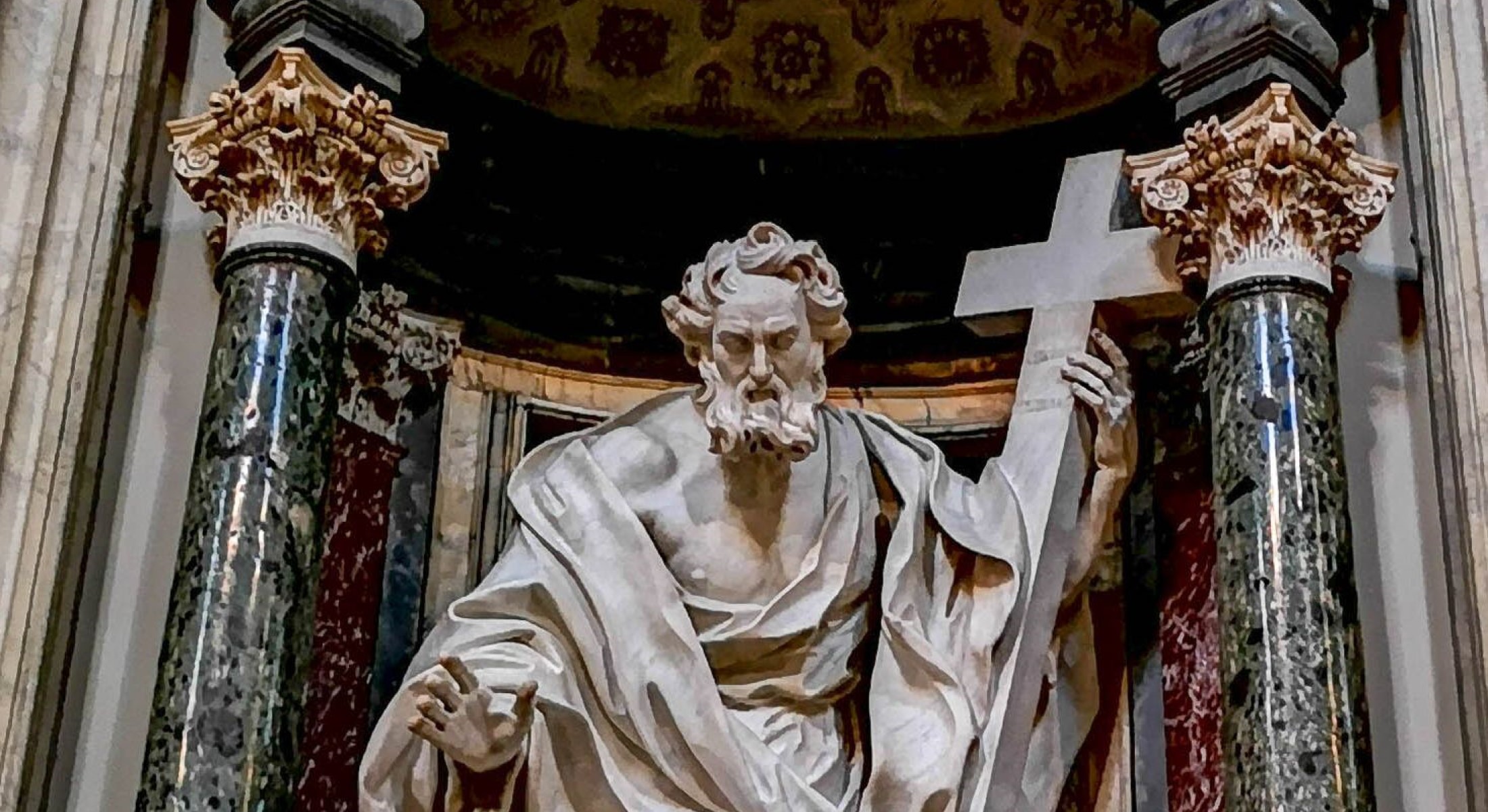
Image: detail of the statue of St Philip the Apostle at the Lateran Basilica, photographed by Biso, via Wikimedia Commons (CC BY-SA 4.0)

Alejandro
I think that the pastoral problem raised by Robert – reaching out to those who do not recognize themselves as Christians – is only part of what Pope Francis and Pope Leo posed to us when they encourage us to be a Church that goes forth. Timothy Radcliffe very intelligently addresses that same problem in two of his books, “What is the Point of Being Christian” and “Alive in God”. The central recommendation given to us is to listen to people.
Here is a striking passage from Alive in God: “Our words must engage with the messy stuff of people’s lives, what they suffer and enjoy; otherwise they will be vacuous. They will not reflect ‘the Word who became flesh and lived among us’ (Jn 1.14) and who invites us to share his abundant life. If we are true to the complexities of people’s struggles to keep going, take the least bad decisions, to our fumbled expressions of love, maybe people will sit up and notice what we Christians have to say. We will have authority if we are humbly attentive to the quiet and heroic honesty with which so many carry on living as best they can.”
A very sharp, revealing, and hopeful talk on this topic can also be found on YouTube: “Building a Church that Listens” by Tracey Lamont.
Catherine
Even mentioning the word God or Christ or Jesus can be very difficult these days and many people don’t want to talk about them for many reasons. Even if someone does want to talk it can be very tricky to know how to approach the subject in such a way as to speak honestly and openly but in a way that doesn’t put them off.
Alejandro
I think you are right, Catherine, it has become very difficult these days. I believe true connection is found less in speaking than in listening, not only with open minds, but above all with open hearts. Last March 8 in San Pedro, Pope Leo just referred to this commenting Jesus’s encounter with the Samaritan woman: “According to custom, he ought to have simply ignored that Samaritan woman; instead, Jesus speaks with her, listens to her, and shows her respect — without a hidden agenda and without disdain. How many people seek in the Church this same sensitivity, this availability!” (L’Osservatore Romano, April 2026 English version, pag. 39).