Peace At Last
Nineteenth Sunday of the Year. Fr Thomas Mannion finds the presence of God in peace, thanksgiving and new life.
‘God speaks not in the earthquake, wind, and fire, but in the still small voice of calm’.
I’m sure many of us have heard this paraphrasing of today’s first reading. This is probably one of the best known, most quoted, and well loved passages of the Old Testament. What is not to love about peace and tranquility? Excitement is a joy for the young. The older we get often we are prepared to sacrifice a lot for a quiet life.
It is not the rocks that the earthquake throws down from the mountainside, or the dust thrown up by the wind, or the heat of the fire that causes Elijah to shield his face but the sound of a low whisper that signified the presence of God.
What humbles us, like Elijah, is not hardship but the undeserving peace giving love that comes from another.
Hardship may come with being close to God; simply look at the sufferings of Christ and the fear he has in anticipation of his passion in Gethsemane. Christ may have willed our salvation but his human nature still recoils from pain as much as ours does. Suffering does not mean God is far from us but neither is it always a sign of God’s presence.
God speaks peace to his people, our psalmist tells us.
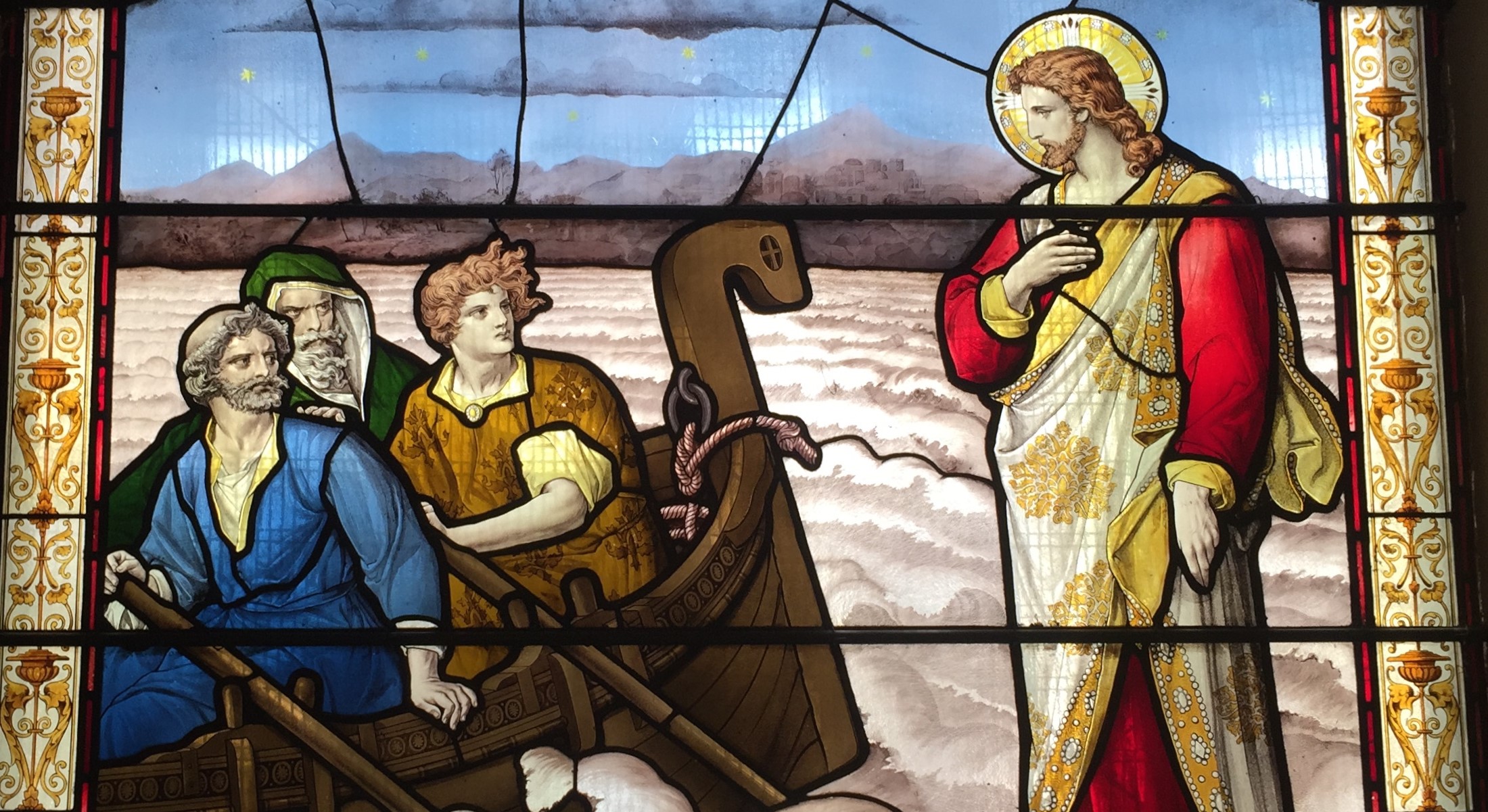
The irony of Jesus walking on the chaotic water speaking peace to the fearful disciples in what should be the safety of the boat. Paul too in our second reading shows a lack of fear in being prepared to suffer for God’s people when most of us what to avoid suffering at all costs. Paul is showing a confidence in God’s mercy and fidelity, the same mercy and fidelity which embrace in the Person of Jesus the Messiah. Indeed, ‘If we are faithless, He remains faithful, for He cannot deny Himself’.
Our peace comes from being with him.
It is His fidelity, despite our lack, that stills the turbulent waters on which we walk. Removing our fears by the fulfilment of our hopes that even in our fragility we are not only lovable but loved, not only loved but transformed by his gift into an instrument of his mercy.
We see the ground shake at the Resurrection and the tombs opened, the wind howls at Pentecost, and Jesus tells us he came to light a fire on earth and how he wishes it was already lit! Yes, even the earthquake, wind, and fire obey Him. As we read elsewhere in the psalms all of creation praises the Lord. As Saint John tells us in his Gospel, ‘Through Him all things were made and not one thing came to be except by him’. Yes, all things can serve the Lord, even the earthquake, wind, and flame can witness to his love.
The Resurrection of Christ breaks into our lives transforming our understanding of death so we can hold our heads high in and amongst the waters of chaos. ‘Though I walk in the valley of the shadow of death, I will fear no evil for you are with me’.
The right response to this great gift is, as we see in the Gospel, worship.
Worship him by sharing in his life. This is what the sacraments are: sharings in the life of Christ. They are sacred rememberings that make God present to us. In them we remember the greatest thing that God has done for us. Our forgetfulness of his goodness, and the great things he has done for us is often what leads to our fear and anxieties and then trading God for lesser goods.
This isn’t a new problem unique to us. Our sins are not so special.
The people of God throughout scripture are forgetful of God’s faithful, merciful, love. Gratitude means remembering his good gifts to you bestowed either directly or through others and to start living again; no longer paralysed by fear and doubt we live good and happy lives, not running away from what is evil, looking over our shoulder, but rather running towards what is good remembering what he has promised us.
Worship him then by gratitude. Remember the great things he has done for you. Laugh in the face of death and learn to live anew.
Readings: 1 Kings 19:9,11-13 | Romans 9:1-5 | Matthew 14:22-33
Image: detail of a stained glass window of Jesus walking on the water photographed by Andrewrabbot via Wikimedia Commons