

What Do We Desire?
Seventeenth Sunday of the Year. Fr Gregory Murphy takes a careful look at the parable of the pearl merchant.
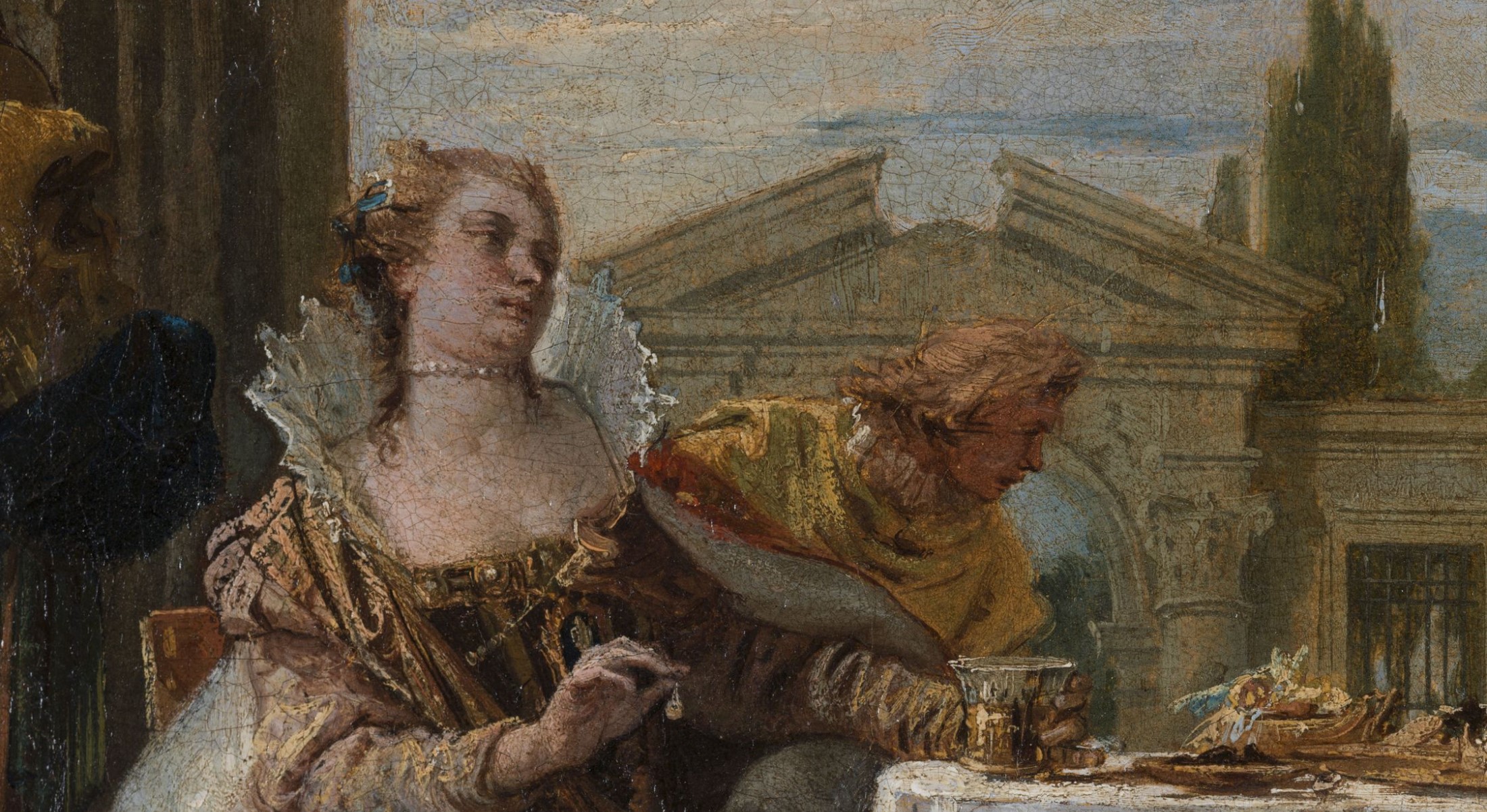
Two of the parables of the kingdom in today’s gospel are about human judgement (or the lack of it). ‘Like is the kingdom of heaven … to a man, who …’. Consider the merchant of pearls. Very few of Jesus’ hearers would ever have seen a pearl, except perhaps at a distance on the regalia of the great and powerful. In Jesus’ time, their value was ‘beyond rubies’. In thinking about this I am drawing on the Jewish New Testament scholar, Amy-Jill Levine. She cites Pliny and a number of subsequent Latin writers telling of Cleopatra wagering her lover Marc Anthony that she could consume ten million sesterces (over a million pounds) at one banquet. At the end of the banquet, she had a plate of vinegar brought to her, dissolved one of her pearl earrings in it, then drank it. Gold-leafed Wagu steaks are a very pale comparison to this level of conspicuous consumption.
A man, a merchant (emporio). ‘Merchant’, Levine notes, is a largely negative term in the Bible. Perhaps the closest modern parallel might be having to experience the ghastly shopping emporia in the security zones of airports, selling goods no-one really needs at prices no-one can really afford. This merchant trades in luxury goods, pearls, yet sells all he has to purchase this one outstanding pearl. He is taking a considerable, very rash gamble that he will find a buyer and make a profit. The phrase ‘sells all he has’ occurs again in Matthew 18, in context of the slave who has embezzled huge amounts of his master’s money. Before he accepts his plea for forgiveness the master orders ‘all he has’ to be sold to meet the debt, including house, wife and children. The merchant performs a life-changing act in making this purchase.
The kingdom of heaven has come upon us, already, in the presence of Jesus, but is still in a sense latent, in that we are awaiting the second coming and the full establishment of God’s reign on earth. As the First Letter of Peter puts it, we should think of this time (of our lives) as God’s patience, our opportunity to be saved. We are on the threshold, one foot in heaven, and so we are forced to act, to determine how we meet this new reality. This parable challenges our sense of what we truly value, thus of how we act. Are we trying to live by the values of the kingdom – mercy, kindness, walking humbly, attentive to the God who walks with us? Or have our values been corrupted by the values of our corrupt society? The parable disturbs, which (Levine says) is what parables should do.
It is not enough then to seek, as the merchant in our parable does. He is not satisfied with the status quo but does not really recognise what it is that will fulfil his seeking, fulfil him. Do we? For that we need wisdom, discerning what is the right thing to do, which Solomon asked from the Lord and which he was granted, along with the Lord’s blessing. Wisdom consists in both knowing what is right and doing it. In knowing what we should do, we are compelled to do it.
How can we discern this? Last week, in the excerpt from Paul’s Letter to the Romans, we were assured that the Spirit’s intercession enables us to pray as we ought; in this week’s brief reading Paul assures us ‘that all things work for good for those who love God’. All will be well. Paul insists that God will not, cannot, abandon those who trust in him. Paul endured many sufferings and hardships, and so might we in our lives, yet in the end all things will be well, because the God who calls us to him is always faithful and always will guide us to find what we truly seek, our home in the glory of the Kingdom to come.
After reciting the Lord’s prayer with the congregation in the Mass, the priest prays that ‘we may be protected from all anxiety’ in the Eucharist we are about to receive. We will find what we seek, and be fulfilled.
Readings: 1 Kings 3:5,7-12 | Romans 8:28-30 | Matthew 13:44-52
Image: detail from The Banquet of Cleopatra by Giovanni Battista Tiepolo, via Wikimedia Commons (public domain)


John Adams
After the Lord’s Prayer the priest prays “… may be always free from sin and safe from all distress”.
“Anxiety” featured before the new translation of the Roman Missal in 2010. I believe “distress” was chosen to include the physical as well as the mental. Though Latin “perturbatione” seems to pertain more to a mental state.
I lamented the passing of “anxiety” as I am a long term Carer for someone with severe mental health problems.