Christ: clarity or confusion?
Even when Jesus seems to be saying the obvious, is he that easy to understand?
The following homily was preached to the student brothers during Compline. You can listen here or read below:
Reading: Luke 12:49-53
Confusion of the highest order is what this passage may cause in some of its hearers. It can be confusing when a preacher draws on wildly varied imagery to illustrate a point. The confusion can be starker when that preacher is God. Here Jesus presents three sets of contrasts – fire and water (the washing of baptism), peace and division, parents and offspring.
At first, we may think the message clear – Christ has come to cut us off from old ways of sin and shame, and to do this, he poses us a choice between God and the world, between faith and failure, between all and nothing. It seems that this is what the Prince of Peace has to mean when he says he brings division.
On the contrary, that’s all well and good, but it’s not the whole picture. Choosing God is one thing, but continuing in that choice, amid all the glitz and glamour, all the leeways and loopholes we could go down, is quite another. It’s easy enough to say ‘I have decided to follow Jesus’, but when we find we’ve turned back, we realise we’re caught within a contrast. If this is you, don’t worry. Here’s where Jesus’ contrast between fire and water comes in.
Jesus wants to rain fire on the earth and be washed in baptism. This fulfils the prophecy that the Lord is ‘like a refiner’s fire and like fuller’s soap’, as you will know from listening to Malachi (3:2) in the first reading at Mass on 23rd December. But haven’t these things already happened? Jesus has been baptised in the Holy Spirit, and he has rained tongues of fire on the Church, giving the same Spirit at Pentecost. The fire he speaks of is the Spirit’s work – the sobering reality of divine judgement against sin, and the purifying action of the Spirit in human hearts.
With fire comes light. The Spirit, acting through life’s ups and downs, illumines the dark places of our hearts, and ‘he who increases in knowledge increases also in sorrow’ (Eccl 1:18). We realise where we’ve gone wrong. That hurts. But with God, where there is judgement, there is always mercy. God does not present the choice and leave it there. He enlarges our freedom to choose him.
Every time we seem to have nothing to give, he wants us to realise ‘I can do all things through Christ who strengthens me’ (Phil 4:13).
Every failure of ours is an invitation to avail ourselves of the faithful love of God.
Every time we see the world for what it is – the joy and sorrow it gives – we receive it again as the arena of divine action, the place of growth and grace.
But as any economist will tell you, growth is not a linear process. As the 19th century father of the Church, John Henry Newman, says:
‘As we gain happiness through suffering, so do we arrive at holiness through infirmity, because man’s very condition is a fallen one, and in passing out of the country of sin, he necessarily passes through it.’
The fact that we can and should bemoan our sins is already a cause for rejoicing, because that would make no sense if Christ has not already conquered sin. If Christ has not risen, then our faith is futile and our preaching pointless (1 Cor 15:17). Yet here we are, sinners called to be partakers of divine nature (2 Pet 1:4), an apparent confusion clarified by God’s mercy.
Not ready yet? Don’t worry. The rich young man hesitated. But Jesus looked at him with love (Mk 10:21). He did the same to Matthew, looking at him with the eyes of mercy (St Bede the Venerable). And what God says to them, he says also to us – ‘Follow me.’
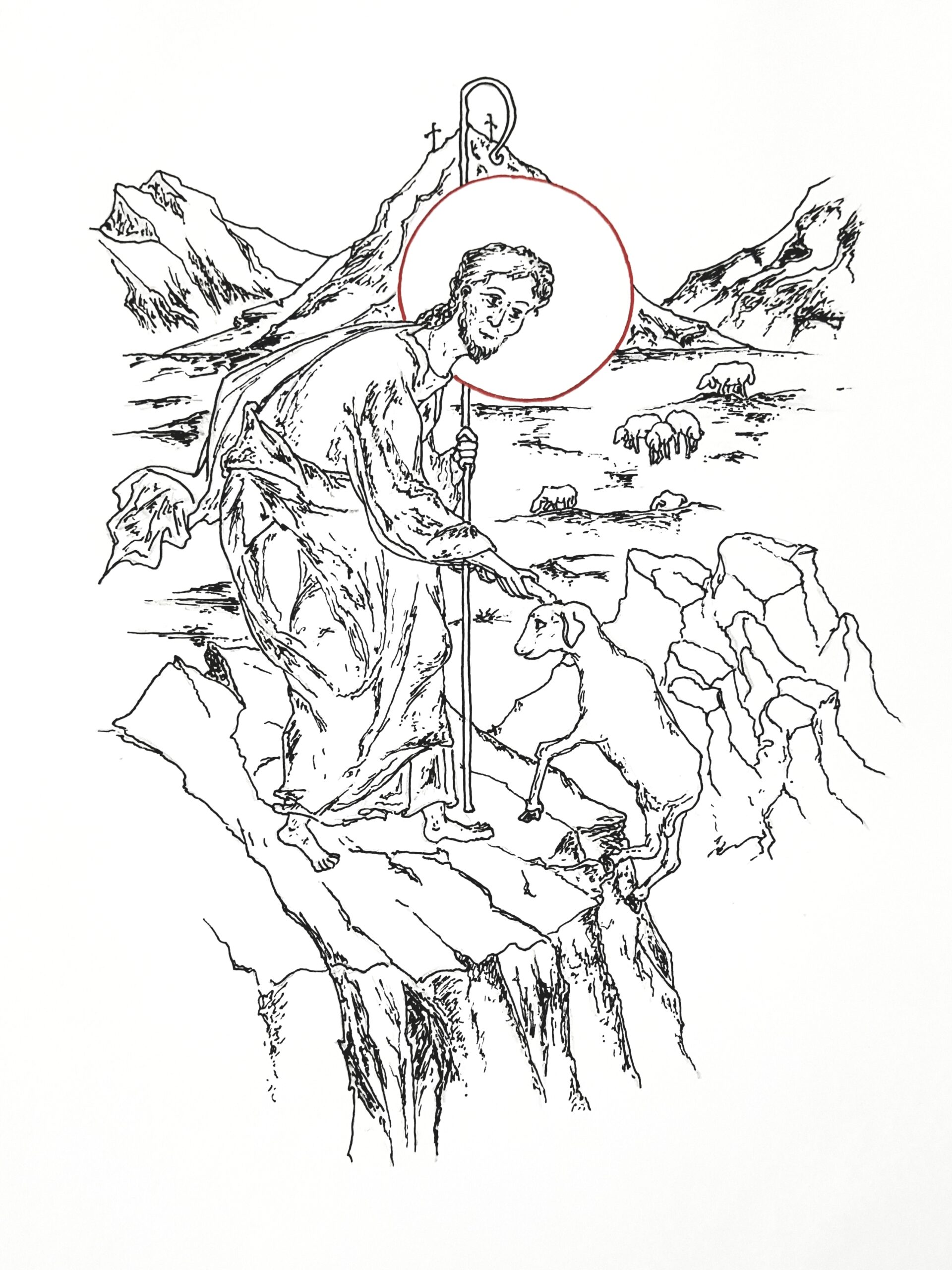
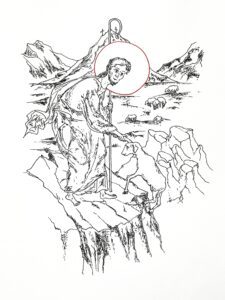
Image: Follow me (Augustine Chen OP, 2023)