Called to share in His Priesthood
Each one of the baptized, then, having the image of Christ impressed upon the soul, is called to offer spiritual sacrifices to God.
The following homily was preached to the student brothers during Compline. You can listen here or read below:
Reading: Matthew 26:36-42
Nowadays, the priest is often seen as an administrator, a dispenser of sacraments, or a kind of religious functionary. In other words, the focus is placed more on what he does than on what he is. This reflects the very modern mindset that values doing more than being. Yet such a vision is not only incomplete but also dangerous, because the meaning of our life does not come first and foremost from what we do; rather, meaning comes from who we are and from what we are called to become.
Therefore, if we want to recover a true vision of the priesthood, we must return to its source: Jesus Christ, whom today we celebrate as the Eternal High Priest. In the Letter to the Hebrews, we see that Christ alone offers the perfect sacrifice, namely the sacrifice of His own life as a spotless victim. Only He — true God and true man, priest and victim — is capable of restoring friendship between humanity and God.
Unlike the ancient priesthood, however, the priesthood of Christ is open to participation. First of all, there is a baptismal participation, as Lumen Gentium teaches: “The baptized, by regeneration and the anointing of the Holy Spirit, are consecrated as a spiritual house and a holy priesthood, in order that through all those works which are those of the Christian man they may offer spiritual sacrifices and […] join in the offering of the Eucharist.”
Each one of the baptized, then, having the image of Christ impressed upon the soul, is called to offer spiritual sacrifices to God: prayers, acts of charity, suffering, daily work, forgiveness, and the witness of a holy life.
However, there is another mode of participation in the eternal priesthood of Christ: the ministerial priesthood of those who have been ordained and who act in persona Christi Capitis and in the name of the Church. Through them, Christ the Eternal High Priest continues to act in the world today, especially by forgiving sins and becoming truly present in the Eucharist. This power is not simply a function delegated by the community, but a real participation in Christ’s own power. It is not merely a role, but a special configuration to Christ Himself.
All the faithful, then, truly participate in the priestly offering of Christ and exercise their royal priesthood in the liturgy and in the holiness of their lives according to their vocation. This vision is full of hope because it reminds us that no Christian is useless or passive in the life of the Church. Everyone can pray. Everyone can intercede. Everyone can offer himself together with Christ to the Father.
The world constantly asks us what we do, what results we produce, and how useful we are. Christ, instead, reminds us of something far deeper: who we are. And perhaps this is the deepest meaning of every vocation: not first of all to do something for Christ, but to belong to Him so completely that His life becomes visible in ours.
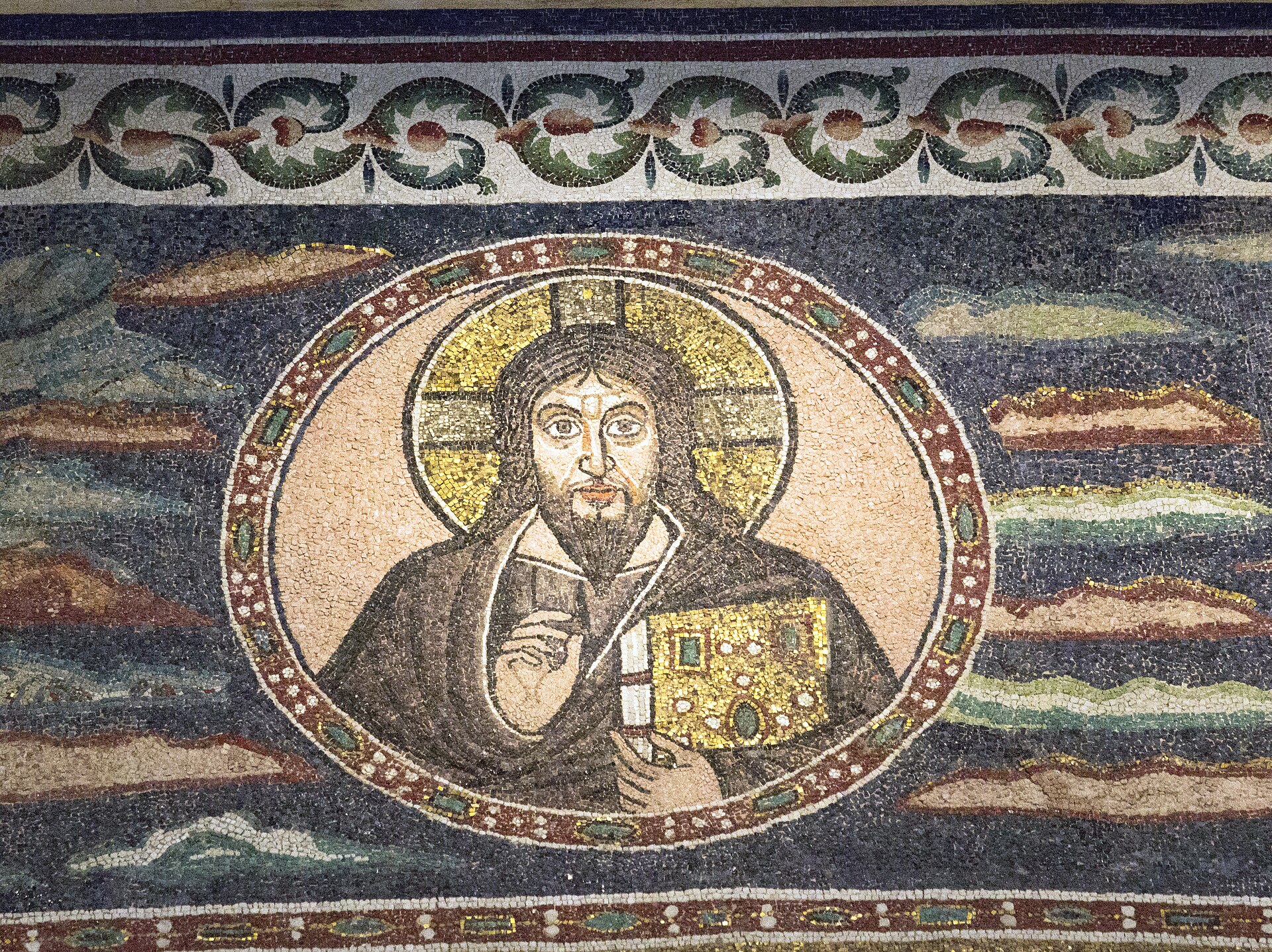
Image: Christ preaching, 7th-century mosaic from the Basilica of Sant’Apollinare in Classe, near Ravenna. Courtesy of Wikimedia Commons.