

Living Stones of the Church
Life of a Christian is not to be self-centred, but to be God-centred.
The following homily was preached to the student brothers during Compline. You can listen here or read below:
Reading: Matthew 16:13-16
In this gospel reading today, Jesus is not seeking the popular opinion of himself but seeing how much His disciples’ opinions are shaped by the world. To set the context, it was popular opinion among Jewish communities that the Messiah would come to save them from the Roman oppression and restore the kingdom of David. But here we can see Peter proclaiming the truth boldly that Jesus is “the Christ, the Son of the living God”. Christos is the Greek term for Christ, which means the anointed one. Jesus is the one anointed by the Spirit who “brings good tidings to the afflicted”, as prophesied by Isaiah; the Messiah that they have been waiting for. Here we can also see that Peter proclaims his relationship to the Father by acknowledging him as the Son, and by stating “of the living God”, he distinguishes true God from idols. Once we encounter Jesus, we must acknowledge him as Peter did. We must let go of our idols and our idealised images of Christ. We must ask ourselves, who do we say Jesus is? We are not meant to be conformed to this world but be transformed by the renewal of our minds, as St. Paul exhorts us to do in the letter to the Romans. And this is no easy task, but with God’s grace, it is possible. Even to Peter, Jesus proclaims that it was not flesh and blood that revealed this to him, but his “Father in heaven”.
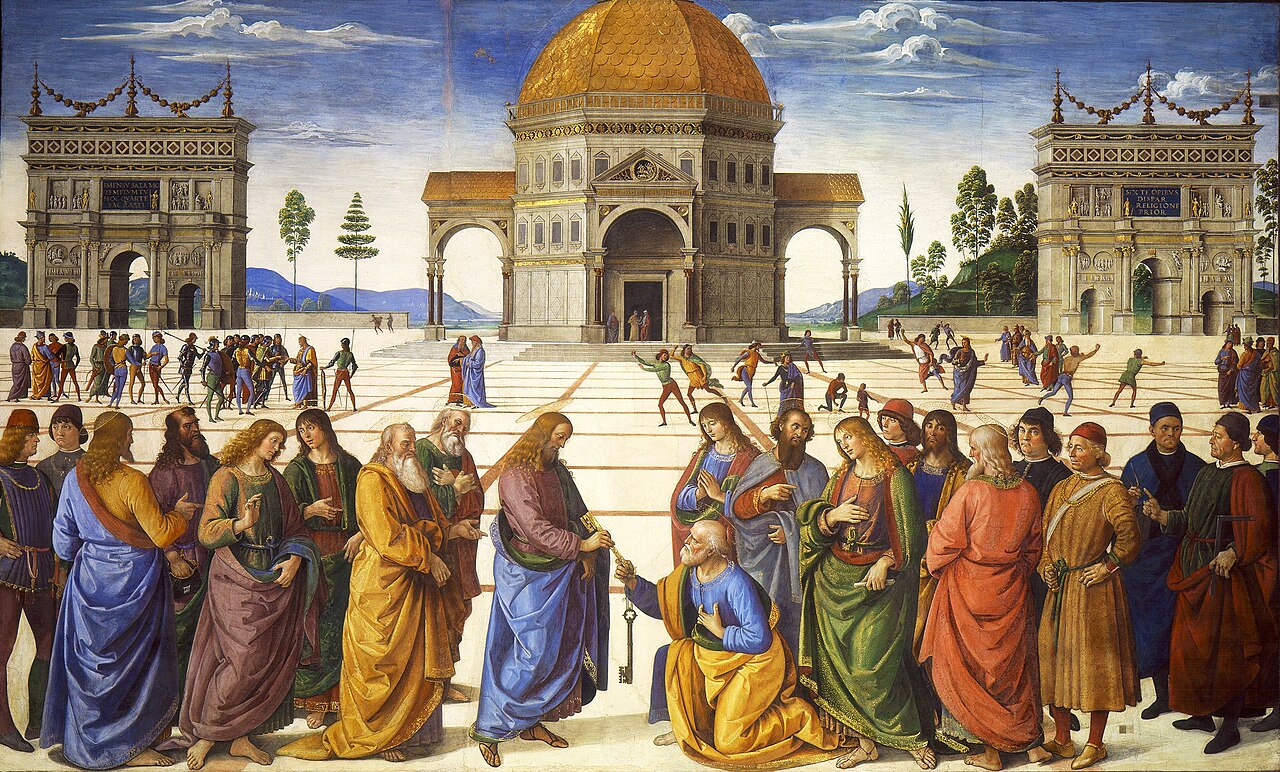
This gospel passage is quoted for the primacy of Peter among the Apostles. Many church fathers have spoken regarding this; St. John Chrysostom calls Peter “head of the choir”, “first of the disciples” and the “unbroken rock on which the Church was built”. St. Augustine emphasises the “keys to the kingdom of heaven” given to Peter. And, St. Cyprian of Carthage highlights the fact that Jesus named Simon as Peter, the rock on which Jesus will build his
Church; thus “primacy is given to Peter, whereby it is made clear that there is but one Church and one chair”. Jesus calls Simon by a new name, Peter. The word Peter in Aramaic is Kepha, and in Greek it is translated to πέτρα (petra), which means rock. A particular mission is given when God renames Abram to Abraham and Jacob to Israel in the Old Testament, and here we can see the same; Simon is made the rock of the new covenant, on which Jesus will build his church.
Notice, Jesus is the one who will build the church. And we are his church; each one of us is named and called by God to a specific mission in our life, which is symbolised by the new name given at our baptism or once we are received into the Catholic Church. Our mission varies widely; some are called to be foundation stones, namely, all the Popes, the successors of Peter, and Apostles and prophets. Some are called to be structural supporting stones, thus supporting and upholding other faithful with their material aid, encouragement and prayers. Some stones are for protection, those who are called to be shepherds of the flock, namely priests and bishops, theologians and apologists who weather heresies and attacks against the church by upholding scriptures, tradition and magisterium of the Catholic Church. Some stones are for aesthetic purposes, thus shining out with the evangelic zeal of the church and calling many into the fold. The point is that we all have a specific part to play to build up this Church; if one stone is lacking or crumbling, it affects the whole building that is the church.
Life of a Christian is not to be self-centred, but to be God-centred. To live in the Spirit in unity with others, thus build up the body of Christ, the Church. Jesus is not asking for perfection, but co-operation with his grace, and He will build His Church.
Image: Pietro Perugino (1448-1523), Christ giving the keys to St Peter. Courtesy of Wikimedia Commons.
.jpg)
Michael O Driscoll
Thank you , Joseph Maryam Emmanuel.
I am especially grateful for bring reminded not to be self centered.
I will continue to be grateful for all help.
Dia dhuit,
Micheál